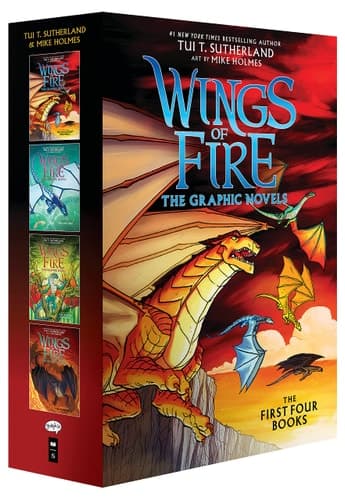
Wings of Fire The Graphic Novels. The first four books — Content Guide for Parents
Themes present
Not found
Content themes
Factual summary of themes present in this book. No opinion — just the facts.
Get the full theme breakdown in the app
Detailed evidence, confidence ratings, and source citations for every theme.
Download for iOSExample theme card
Religious themes
PRESENTContains references to prayer and church attendance. A minister character plays a supporting role in two chapters.
About this book
Frequently asked questions
Is Wings of Fire The Graphic Novels. The first four books appropriate for a 7-year-old?
The series contains significant violence, particularly in the first book, where young dragons face cruelty, imprisonment, and arena fighting. Subsequent books also depict severe injuries and magical violence. The series contains dark themes and traumatic backstories, including abuse and neglect, which may be frightening for younger readers.
Does Wings of Fire The Graphic Novels. The first four books have violence?
The series contains significant violence, particularly in the first book, where young dragons face cruelty, imprisonment, and arena fighting. Subsequent books also depict severe injuries and magical violence.
Does Wings of Fire The Graphic Novels. The first four books have scary content?
The series contains dark themes and traumatic backstories, including abuse and neglect, which may be frightening for younger readers.
Does Wings of Fire The Graphic Novels. The first four books have religious themes?
The series does not include any religious beliefs or practices, and the dragons are depicted as having no god or religious structure.
Does Wings of Fire The Graphic Novels. The first four books have racial/cultural content?
While the series features dragons from different tribes, race is not a central theme or discussed in terms of real-world racial dynamics.
Does Wings of Fire The Graphic Novels. The first four books have profanity?
The series includes mild expressions such as 'camel farts' and 'holy smoking vipers', which may be considered inappropriate for some audiences.
Does Wings of Fire The Graphic Novels. The first four books have climate change?
The series includes themes of adaptation to environments, with characters discovering the benefits of their natural habitats, suggesting an awareness of ecological themes.
Does Wings of Fire The Graphic Novels. The first four books have sexual identity?
The series features crushes and flirting among characters, including same-gender romantic elements, but these are presented in a chaste manner appropriate for middle-grade readers.
Does Wings of Fire The Graphic Novels. The first four books have gender roles?
The series challenges traditional gender stereotypes, as the dragons are not generally gender stereotyped and the narrative includes themes of striving for peace in a war-mongering culture.
Does Wings of Fire The Graphic Novels. The first four books have lgbtq+ themes?
The series includes characters with same-gender crushes and chaste romantic elements. The author has confirmed that some characters are bisexual or pansexual, and relationships are treated as normal within the narrative.