We Don't Lose Our Class Goldfish — Content Guide for Parents
Themes present
Not found
Content themes
Factual summary of themes present in this book. No opinion — just the facts.
Get the full theme breakdown in the app
Detailed evidence, confidence ratings, and source citations for every theme.
Download for iOSExample theme card
Religious themes
PRESENTContains references to prayer and church attendance. A minister character plays a supporting role in two chapters.
About this book
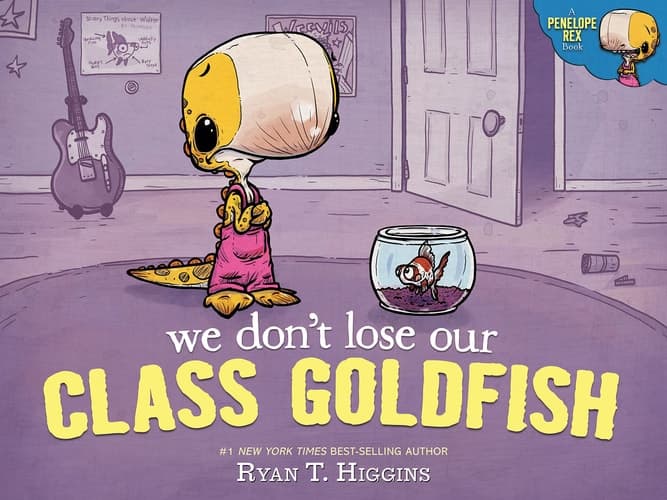
Penelope Rex has one fear: Walter, the class goldfish. So when Mrs. Noodleman tells the kids that they'll be taking turns bringing Walter home, Penelope gets carried away by her anxious imagination. The weekend has a rocky start--from Walter ominously licking his lips to a sleepless night where the fish's bowl appears to move closer and closer to Penelope's bed. But then Walter goes missing! Penelope must face her fear to find him and realizes along the way that there's more to Walter than his chomping jaws.
Join Penelope Rex in her other adventures:
- We Don't Eat Our Classmates by Ryan T. Higgins
- We Will Rock Our Classmates by Ryan T. Higgins
- Penelope Rex and the Problem with Pets by Ryan T. Higgins
- Bundle Up, Penelope Rex by Ryan T. Higgins
Frequently asked questions
Is We Don't Lose Our Class Goldfish appropriate for a 7-year-old?
No violence present in the book. The story revolves around Penelope's fear of Walter, the goldfish, and her imaginative experiences, which do not involve physical violence. No genuinely frightening content in the book. While Penelope is scared of the goldfish, the context is humorous and age-appropriate, not intended to cause fear.
Does We Don't Lose Our Class Goldfish have violence?
No violence present in the book. The story revolves around Penelope's fear of Walter, the goldfish, and her imaginative experiences, which do not involve physical violence.
Does We Don't Lose Our Class Goldfish have scary content?
No genuinely frightening content in the book. While Penelope is scared of the goldfish, the context is humorous and age-appropriate, not intended to cause fear.
Does We Don't Lose Our Class Goldfish have religious themes?
No religious content in the book itself. The narrative does not include any religious practices, beliefs, or themes.
Does We Don't Lose Our Class Goldfish have racial/cultural content?
Race is not a central theme in the book. The narrative features a mix of characters but does not address racial issues or themes explicitly.
Does We Don't Lose Our Class Goldfish have profanity?
No profanity detected in the book. The language is appropriate for children and focuses on relatable themes.
Does We Don't Lose Our Class Goldfish have climate change?
No climate themes present in the book. The story focuses on personal fears and school experiences rather than environmental issues.
Does We Don't Lose Our Class Goldfish have sexual identity?
No sexual content in the book. The narrative is focused on childhood experiences and fears, particularly related to school and friendships.
Does We Don't Lose Our Class Goldfish have gender roles?
The book does not actively discuss or promote gender roles. Penelope Rex is a dinosaur character, and while she navigates school life, the narrative does not engage with traditional or modern gender roles.
Does We Don't Lose Our Class Goldfish have lgbtq+ themes?
No LGBTQ+ themes or characters mentioned in the book's narrative. The focus is on Penelope Rex and her experiences with the class goldfish, Walter.
Related books
More related books will appear here when available.