We Don't Eat Our Classmates — Content Guide for Parents
Themes present
Not found
Content themes
Factual summary of themes present in this book. No opinion — just the facts.
Get the full theme breakdown in the app
Detailed evidence, confidence ratings, and source citations for every theme.
Download for iOSExample theme card
Religious themes
PRESENTContains references to prayer and church attendance. A minister character plays a supporting role in two chapters.
About this book
Frequently asked questions
Is We Don't Eat Our Classmates appropriate for a 7-year-old?
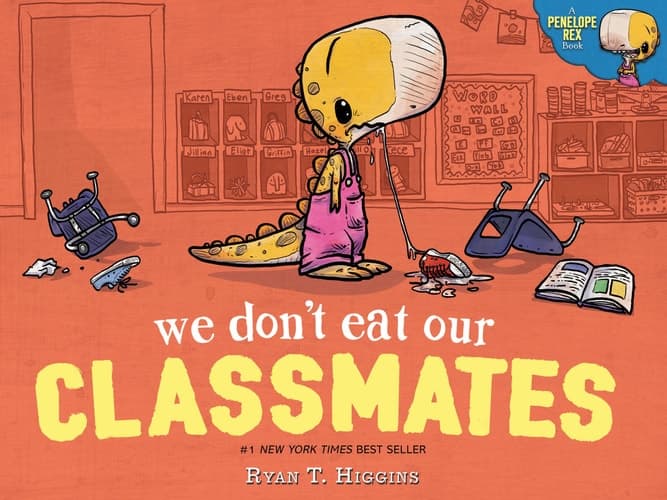
The book features a playful premise where a T-Rex named Penelope struggles with the idea of making friends without eating them. While there is a humorous element of Penelope attempting to eat her classmates, it is portrayed in a cartoonish and non-violent manner, with no actual violence depicted. The book does not contain genuinely frightening content. It addresses themes of fear and anxiety related to starting school in a lighthearted manner, making it suitable for young readers.
Does We Don't Eat Our Classmates have violence?
The book features a playful premise where a T-Rex named Penelope struggles with the idea of making friends without eating them. While there is a humorous element of Penelope attempting to eat her classmates, it is portrayed in a cartoonish and non-violent manner, with no actual violence depicted.
Does We Don't Eat Our Classmates have scary content?
The book does not contain genuinely frightening content. It addresses themes of fear and anxiety related to starting school in a lighthearted manner, making it suitable for young readers.
Does We Don't Eat Our Classmates have religious themes?
No religious content in the book itself. The search results mention other contexts and discussions but do not provide evidence of religious practices or beliefs in the narrative.
Does We Don't Eat Our Classmates have racial/cultural content?
Race is not a central theme in the book. While the illustrations feature a diverse class, the narrative does not focus on racial issues or themes.
Does We Don't Eat Our Classmates have profanity?
No profanity is present in the book. The narrative is aimed at young children and maintains an age-appropriate vocabulary.
Does We Don't Eat Our Classmates have climate change?
There are no climate themes present in the book. The narrative focuses on social interactions and the challenges of making friends rather than environmental issues.
Does We Don't Eat Our Classmates have sexual identity?
There is no sexual content in the book. The search results mention other media with sexual themes but do not relate to 'We Don't Eat Our Classmates'.
Does We Don't Eat Our Classmates have gender roles?
The book does not actively discuss or critique gender roles. It features a female dinosaur protagonist but does not engage with themes related to gender expectations or roles.
Does We Don't Eat Our Classmates have lgbtq+ themes?
No LGBTQ+ themes are present in the book. The search results reference general discussions about LGBTQ+ characters in other contexts but do not indicate any specific LGBTQ+ content in 'We Don't Eat Our Classmates'.
Related books
More related books will appear here when available.