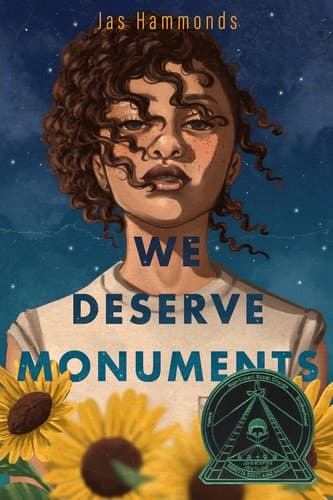
We Deserve Monuments — Content Guide for Parents
Themes present
Not found
Content themes
Factual summary of themes present in this book. No opinion — just the facts.
Get the full theme breakdown in the app
Detailed evidence, confidence ratings, and source citations for every theme.
Download for iOSExample theme card
Religious themes
PRESENTContains references to prayer and church attendance. A minister character plays a supporting role in two chapters.
About this book
"An absolute must read." —Buzzfeed
"A gripping portrayal of the South's inherent racism and a love story for queer Black girls." —Teen Vogue
Family secrets, a swoon-worthy romance, and a slow-burn mystery collide in We Deserve Monuments, the award-winning debut novel from Jas Hammonds exploring the ways racial violence can ripple down through generations.
What’s more important: Knowing the truth or keeping the peace?
Seventeen-year-old Avery Anderson is convinced her senior year is ruined when she's uprooted from her life in DC and forced into the hostile home of her terminally ill grandmother, Mama Letty. The tension between Avery’s mom and Mama Letty makes for a frosty arrival and unearths past drama they refuse to talk about. Every time Avery tries to look deeper, she’s turned away, leaving her desperate to learn the secrets that split her family in two.
While tempers flare in her avoidant family, Avery finds friendship in unexpected places: in Simone Cole, her captivating next-door neighbor, and Jade Oliver, daughter of the town’s most prominent family—whose mother’s murder remains unsolved.
As the three girls grow closer—Avery and Simone’s friendship blossoming into romance—the sharp-edged opinions of their small southern town begin to hint at something insidious underneath. The racist history of Bardell, Georgia is rooted in Avery’s family in ways she can’t even imagine. With Mama Letty's health dwindling every day, Avery must decide if digging for the truth is worth toppling the delicate relationships she's built in Bardell—or if some things are better left buried.
Frequently asked questions
Is We Deserve Monuments appropriate for a 7-year-old?
The book addresses themes of anti-Black violence and generational trauma, including references to systemic racism and physical violence. It explores how these experiences affect the characters and their relationships. No content deemed scary or inappropriate for children detected in the narrative.
Does We Deserve Monuments have violence?
The book addresses themes of anti-Black violence and generational trauma, including references to systemic racism and physical violence. It explores how these experiences affect the characters and their relationships.
Does We Deserve Monuments have scary content?
No content deemed scary or inappropriate for children detected in the narrative.
Does We Deserve Monuments have religious themes?
No religious content detected in the narrative of We Deserve Monuments.
Does We Deserve Monuments have racial/cultural content?
The story tackles themes of racism and systemic racism, particularly focusing on the experiences of Black characters and the impact of generational trauma. It critiques racial violence and explores its historical context.
Does We Deserve Monuments have profanity?
No profanity detected in the narrative of We Deserve Monuments.
Does We Deserve Monuments have climate change?
No climate-related themes or environmental issues detected in the narrative of We Deserve Monuments.
Does We Deserve Monuments have sexual identity?
No explicit sexual content is mentioned in the search results. The focus is more on relationships and identity rather than sexual themes.
Does We Deserve Monuments have gender roles?
No specific gender roles or themes related to traditional or modern gender expectations detected in the narrative.
Does We Deserve Monuments have lgbtq+ themes?
The main character, Avery, is described as cis, biracial-Black, and pansexual, while Simone, a significant character, is cis, Black, plus-sized, and lesbian. The narrative explores themes of queer love and identity, framing these experiences as central to the story.