Very Far Away — Content Guide for Parents
Themes present
Not found
Content themes
Factual summary of themes present in this book. No opinion — just the facts.
Get the full theme breakdown in the app
Detailed evidence, confidence ratings, and source citations for every theme.
Download for iOSExample theme card
Religious themes
PRESENTContains references to prayer and church attendance. A minister character plays a supporting role in two chapters.
About this book
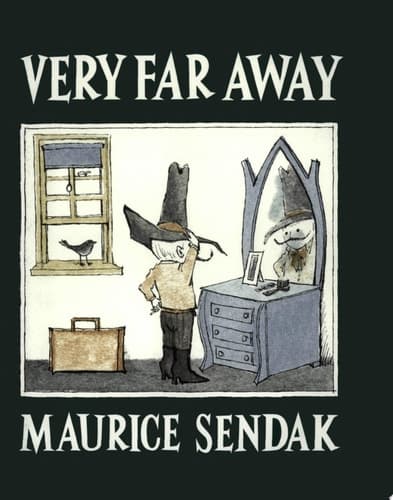
First published in 1957, Very Far Away is the second book Sendak both wrote and illustrated.
In this story, a young boy with a new baby sibling, must learn to cope with his sudden lack of attention. He goes out searching for 'very far away'.
Frequently asked questions
Is Very Far Away appropriate for a 7-year-old?
No violence is present in 'Very Far Away'. The story revolves around a young boy named Martin who feels neglected and decides to run away, but this is portrayed in a humorous and gentle manner without any physical conflict or harm. No genuinely frightening content in 'Very Far Away'. The narrative addresses feelings of exclusion and curiosity in a light-hearted manner, making it suitable for young readers without inducing fear.
Does Very Far Away have violence?
No violence is present in 'Very Far Away'. The story revolves around a young boy named Martin who feels neglected and decides to run away, but this is portrayed in a humorous and gentle manner without any physical conflict or harm.
Does Very Far Away have scary content?
No genuinely frightening content in 'Very Far Away'. The narrative addresses feelings of exclusion and curiosity in a light-hearted manner, making it suitable for young readers without inducing fear.
Does Very Far Away have religious themes?
No religious content in the book itself. Although Maurice Sendak identified as an atheist and discussed his views on religion in interviews, these aspects are not reflected in the narrative of 'Very Far Away'.
Does Very Far Away have racial/cultural content?
No explicit racial themes in the book. The story does not address issues of race or racism, focusing instead on a child's emotional experience and family dynamics.
Does Very Far Away have profanity?
No profanity is present in the book. The language used is appropriate for its intended audience of young children, focusing on simple and relatable themes.
Does Very Far Away have climate change?
No climate themes present in the book. 'Very Far Away' focuses on childhood emotions and experiences rather than environmental issues or activism.
Does Very Far Away have sexual identity?
No sexual content in 'Very Far Away'. The book is aimed at children and focuses on themes of childhood feelings and exploration without any references to sexuality.
Does Very Far Away have gender roles?
The book does not actively discuss or critique gender roles. It features a young boy as the protagonist but does not promote traditional or modern gender roles within its narrative.
Does Very Far Away have lgbtq+ themes?
No LGBTQ+ themes present in the book 'Very Far Away' by Maurice Sendak. While Sendak's personal identity as a gay man is noted in external sources, it does not translate to explicit content within the narrative of this specific book.
Related books
More related books will appear here when available.