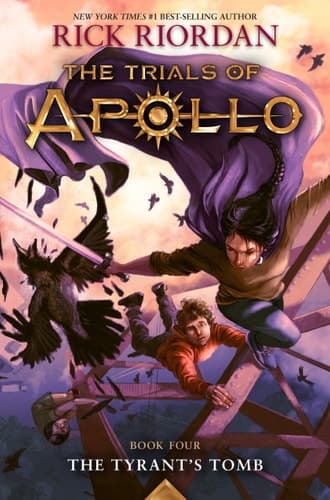
The Tyrant's Tomb (The Trials of Apollo, Book Four) — Content Guide for Parents
Themes present
Not found
Content themes
Factual summary of themes present in this book. No opinion — just the facts.
Get the full theme breakdown in the app
Detailed evidence, confidence ratings, and source citations for every theme.
Download for iOSExample theme card
Religious themes
PRESENTContains references to prayer and church attendance. A minister character plays a supporting role in two chapters.
About this book
Frequently asked questions
Is The Tyrant's Tomb (The Trials of Apollo, Book Four) appropriate for a 7-year-old?
The book contains instances of bloodshed and violence, including the death of a beloved character and battles against mythological creatures. The narrative includes descriptions of injuries and the aftermath of violence, consistent with the series' themes. The story features elements that could be considered scary for younger readers, including attacks by mythological creatures like eurynomoi, which are described as giant underworld vultures, creating a sense of danger and tension.
Does The Tyrant's Tomb (The Trials of Apollo, Book Four) have violence?
The book contains instances of bloodshed and violence, including the death of a beloved character and battles against mythological creatures. The narrative includes descriptions of injuries and the aftermath of violence, consistent with the series' themes.
Does The Tyrant's Tomb (The Trials of Apollo, Book Four) have scary content?
The story features elements that could be considered scary for younger readers, including attacks by mythological creatures like eurynomoi, which are described as giant underworld vultures, creating a sense of danger and tension.
Does The Tyrant's Tomb (The Trials of Apollo, Book Four) have religious themes?
The narrative is steeped in Greek-Roman mythology, with Apollo as a central character who embodies mythological themes and atonement. The story reflects on the intersection of classical mythology with contemporary values, but does not promote any specific religious beliefs.
Does The Tyrant's Tomb (The Trials of Apollo, Book Four) have racial/cultural content?
The book features a diverse cast of characters, including individuals of various racial backgrounds. The narrative acknowledges this diversity and includes characters with different ethnicities, contributing to the representation of multiculturalism.
Does The Tyrant's Tomb (The Trials of Apollo, Book Four) have profanity?
The narrative includes instances of profanity, as noted in reviews discussing the informal and candid language used by characters, which is typical of Riordan's writing style.
Does The Tyrant's Tomb (The Trials of Apollo, Book Four) have climate change?
There are no explicit themes related to climate activism or environmentalism present in the book. The narrative focuses on mythological adventures rather than contemporary climate issues.
Does The Tyrant's Tomb (The Trials of Apollo, Book Four) have sexual identity?
The book discusses themes of asexuality and aromanticism through the character Rick, who contemplates his lack of sexual and romantic attraction. This representation contributes to the broader discussions of sexual identity in the narrative.
Does The Tyrant's Tomb (The Trials of Apollo, Book Four) have gender roles?
While the book features strong female characters and diverse identities, it does not actively discuss or critique traditional gender roles or promote feminist themes. The focus remains on adventure and mythological elements rather than gender dynamics.
Does The Tyrant's Tomb (The Trials of Apollo, Book Four) have lgbtq+ themes?
The book features LGBTQ+ characters, including Apollo's bisexuality and characters who identify as transgender and nonbinary. Reyna's ambiguous attraction to both men and women is also noted, suggesting a nuanced representation of sexuality.