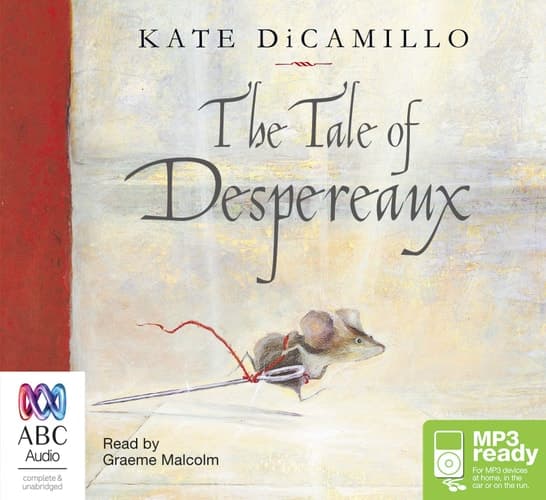
The Tale of Despereaux — Content Guide for Parents
Themes present
Not found
Content themes
Factual summary of themes present in this book. No opinion — just the facts.
Get the full theme breakdown in the app
Detailed evidence, confidence ratings, and source citations for every theme.
Download for iOSExample theme card
Religious themes
PRESENTContains references to prayer and church attendance. A minister character plays a supporting role in two chapters.
About this book
Frequently asked questions
Is The Tale of Despereaux appropriate for a 7-year-old?
The book contains themes of violence and abuse, particularly in relation to the character Miggery Sow, who experiences significant hardships. There are references to darker themes, including the idea of 'rats lusting for mouse blood', which may be disturbing for younger readers. The book has elements that could be considered scary, such as the depiction of a dungeon and the darker themes of betrayal and abuse. Some readers have reported feeling frightened by certain scenes, indicating that it may not be suitable for very young children.
Does The Tale of Despereaux have violence?
The book contains themes of violence and abuse, particularly in relation to the character Miggery Sow, who experiences significant hardships. There are references to darker themes, including the idea of 'rats lusting for mouse blood', which may be disturbing for younger readers.
Does The Tale of Despereaux have scary content?
The book has elements that could be considered scary, such as the depiction of a dungeon and the darker themes of betrayal and abuse. Some readers have reported feeling frightened by certain scenes, indicating that it may not be suitable for very young children.
Does The Tale of Despereaux have religious themes?
No religious content is present in the book itself. While some discussions mention themes of faith and morality, they do not constitute explicit religious practices or beliefs within the story.
Does The Tale of Despereaux have racial/cultural content?
Race is not a central theme in the book. The characters are primarily anthropomorphic animals and do not engage in discussions about race or racism. The narrative focuses on the characters' individual stories rather than racial dynamics.
Does The Tale of Despereaux have profanity?
No profanity or crude language is present in the book. The content is appropriate for children, focusing on themes of bravery and love without the inclusion of inappropriate language.
Does The Tale of Despereaux have climate change?
There are no themes related to climate change or environmental issues present in the book. The narrative focuses on personal and emotional journeys rather than ecological concerns.
Does The Tale of Despereaux have sexual identity?
The narrative includes romantic elements, particularly Despereaux's love for Princess Pea, which is described as him vowing to serve her as her knight. This is framed as a child-friendly romantic interest rather than explicit sexual content.
Does The Tale of Despereaux have gender roles?
The story includes themes related to gender roles, particularly through the character of Miggery Sow, who desires to be a princess and faces societal limitations. This reflects traditional gender expectations and critiques the dominance over her desires, suggesting a commentary on gender equality.
Does The Tale of Despereaux have lgbtq+ themes?
No LGBTQ+ themes are explicitly present in the book. The search results mention characters and themes but do not indicate any LGBTQ+ representation or exploration within the narrative of 'The Tale of Despereaux'.