The Taking of Jake Livingston — Content Guide for Parents
Themes present
Not found
Content themes
Factual summary of themes present in this book. No opinion — just the facts.
Get the full theme breakdown in the app
Detailed evidence, confidence ratings, and source citations for every theme.
Download for iOSExample theme card
Religious themes
PRESENTContains references to prayer and church attendance. A minister character plays a supporting role in two chapters.
About this book
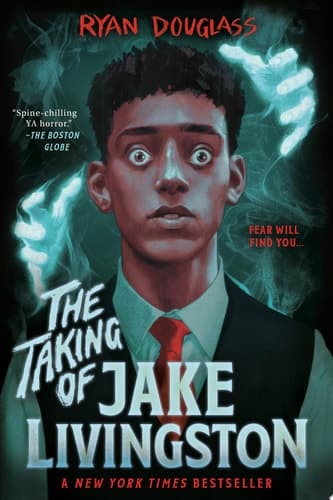
Get Out meets Holly Jackson in this YA social thriller where survival is not a guarantee.
Sixteen-year-old Jake Livingston sees dead people everywhere. But he can't decide what's worse: being a medium forced to watch the dead play out their last moments on a loop or being at the mercy of racist teachers as one of the few Black students at St. Clair Prep. Both are a living nightmare he wishes he could wake up from. But things at St. Clair start looking up with the arrival of another Black student—the handsome Allister—and for the first time, romance is on the horizon for Jake.
Unfortunately, life as a medium is getting worse. Though most ghosts are harmless and Jake is always happy to help them move on to the next place, Sawyer Doon wants much more from Jake. In life, Sawyer was a troubled teen who shot and killed six kids at a local high school before taking his own life. Now he's a powerful, vengeful ghost and he has plans for Jake. Suddenly, everything Jake knows about dead world goes out the window as Sawyer begins to haunt him. High school soon becomes a different kind of survival game—one Jake is not sure he can win.
Frequently asked questions
Is The Taking of Jake Livingston appropriate for a 7-year-old?
The book includes themes of violence, specifically a school shooting, which is a central plot element. It also contains graphic depictions of death and gun violence. The book is described as a dark, paranormal thriller with frightening scenes, including the haunting of the protagonist by the ghost of a school shooter.
Does The Taking of Jake Livingston have violence?
The book includes themes of violence, specifically a school shooting, which is a central plot element. It also contains graphic depictions of death and gun violence.
Does The Taking of Jake Livingston have scary content?
The book is described as a dark, paranormal thriller with frightening scenes, including the haunting of the protagonist by the ghost of a school shooter.
Does The Taking of Jake Livingston have religious themes?
No religious practices, beliefs, or ceremonies are mentioned in the narrative of the book.
Does The Taking of Jake Livingston have racial/cultural content?
The narrative centers on Jake, a Black teenager, and addresses themes of racism and microaggressions he faces in a predominantly white school environment. This racial identity is a significant aspect of the story.
Does The Taking of Jake Livingston have profanity?
No explicit mention of profanity is found in the search results related to the book's narrative.
Does The Taking of Jake Livingston have climate change?
No climate themes or discussions are present in the narrative of the book.
Does The Taking of Jake Livingston have sexual identity?
The narrative includes content warnings for sexual activity, with characters filming and sharing films of such activities. This suggests a discussion of sexual themes, though the context is not fully detailed in the sources.
Does The Taking of Jake Livingston have gender roles?
No specific gender roles or discussions about gender expectations are present in the narrative.
Does The Taking of Jake Livingston have lgbtq+ themes?
The protagonist, Jake, is identified as gay and the narrative explores his experiences as a Black queer teenager. The story addresses themes of queer trauma and microaggressions in predominantly white spaces.