The Norendy Tales Trilogy — Content Guide for Parents
Themes present
Not found
Content themes
Factual summary of themes present in this book. No opinion — just the facts.
Get the full theme breakdown in the app
Detailed evidence, confidence ratings, and source citations for every theme.
Download for iOSExample theme card
Religious themes
PRESENTContains references to prayer and church attendance. A minister character plays a supporting role in two chapters.
About this book
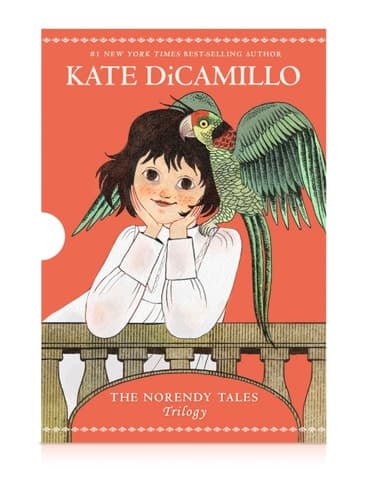
Discover the wonder and magic of a land called Norendy in these three classically illustrated novellas. In The Puppets of Spelhorst,illustrated by Julie Morstad,five puppets seek their destiny after ending up in the home of two little girls determined to put on a play. In The Hotel Balzaar,illustrated by Júlia Sardà, a mysterious countess checks in to the hotel where a girl named Marta lives; the countess promises to tell seven stories that may uncover the secret of Marta’s father’s disappearance. And in Lost Evangeline,illustrated by Sophie Blackall, a tiny girl (as small as a mouse!) is separated from her father and must marshal all of her bravery and resourcefulness to find him again. Each story is perfect for savoring alone or for reading aloud and sharing with those you love. The box also includes a frameable full-color print featuring exclusive artwork of Evangeline from two-time Caldecott Medalist Sophie Blackall.
Frequently asked questions
Is The Norendy Tales Trilogy appropriate for a 7-year-old?
The trilogy features elements of danger and villains, as noted in the description of 'Lost Evangeline', where the protagonist faces assorted villains and a hungry cat. This indicates a level of conflict that could be considered mild violence but is framed in a fantastical context. No genuinely frightening content is indicated. The stories are described as lively and cozy, aimed at young readers, suggesting that any tension is mild and suitable for children.
Does The Norendy Tales Trilogy have violence?
The trilogy features elements of danger and villains, as noted in the description of 'Lost Evangeline', where the protagonist faces assorted villains and a hungry cat. This indicates a level of conflict that could be considered mild violence but is framed in a fantastical context.
Does The Norendy Tales Trilogy have scary content?
No genuinely frightening content is indicated. The stories are described as lively and cozy, aimed at young readers, suggesting that any tension is mild and suitable for children.
Does The Norendy Tales Trilogy have religious themes?
No religious content in the book itself. The search results do not indicate any religious practices, beliefs, or ceremonies present in the narrative of The Norendy Tales Trilogy.
Does The Norendy Tales Trilogy have racial/cultural content?
No explicit racial themes or discussions present in the book's narrative. The search results do not highlight race as a central theme or plot point in The Norendy Tales Trilogy.
Does The Norendy Tales Trilogy have profanity?
No profanity detected in the book. The descriptions of the stories focus on themes of storytelling and emotional impact without reference to any inappropriate language.
Does The Norendy Tales Trilogy have climate change?
No climate themes detected in the book. The search results do not indicate any environmental activism or discussions related to climate change within the narrative of The Norendy Tales Trilogy.
Does The Norendy Tales Trilogy have sexual identity?
No sexual content in the book. The search results do not mention any explicit sexual themes or content within the narrative of The Norendy Tales Trilogy.
Does The Norendy Tales Trilogy have gender roles?
The narrative includes themes of empowerment, particularly through the character of Evangeline, who is described as brave and resourceful. This suggests a positive portrayal of female agency, though it is not explicitly framed as a critique or promotion of gender roles.
Does The Norendy Tales Trilogy have lgbtq+ themes?
The Norendy Tales Trilogy includes themes that celebrate queer families, indicating a positive representation of LGBTQ+ characters and experiences. However, specific details about LGBTQ+ content in the narrative are not explicitly provided in the search results.