The Nightmare Room Thrillogy #2: What Scares You the Most? — Content Guide for Parents
Themes present
Not found
Content themes
Factual summary of themes present in this book. No opinion — just the facts.
Get the full theme breakdown in the app
Detailed evidence, confidence ratings, and source citations for every theme.
Download for iOSExample theme card
Religious themes
PRESENTContains references to prayer and church attendance. A minister character plays a supporting role in two chapters.
About this book
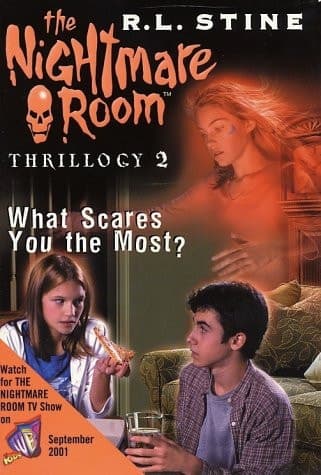
Twelve ultra-smart, ultra-competitive kids have been selectedto take part in a survival competition called Life Games.
Not only will they have to overcome the dangers of life on atropical island, they'll also have to face the evil presence thatlives there ... waiting for its next victim.
What Scares You the Most?
April is stranded on the island! She's desperate to escape and get back to her normal life. But April's life will never be normal again. Because someone -- or something -- evil will follow her home, using her deepest fears against her.
Frequently asked questions
Is The Nightmare Room Thrillogy #2: What Scares You the Most? appropriate for a 7-year-old?
The book is described as a horror chapter book that includes elements of tension and potentially frightening situations. While specific instances of violence are not detailed in the search results, it is noted that R.L. Stine's works often contain age-appropriate amounts of tension and violence designed to scare children. The book is categorized as a horror chapter book aimed at children, focusing on themes of fear and survival. It is designed to be scary for its intended audience, which is indicated by its classification and description.
Does The Nightmare Room Thrillogy #2: What Scares You the Most? have violence?
The book is described as a horror chapter book that includes elements of tension and potentially frightening situations. While specific instances of violence are not detailed in the search results, it is noted that R.L. Stine's works often contain age-appropriate amounts of tension and violence designed to scare children.
Does The Nightmare Room Thrillogy #2: What Scares You the Most? have scary content?
The book is categorized as a horror chapter book aimed at children, focusing on themes of fear and survival. It is designed to be scary for its intended audience, which is indicated by its classification and description.
Does The Nightmare Room Thrillogy #2: What Scares You the Most? have religious themes?
No religious content in the book itself. The search results do not indicate any religious themes, practices, or beliefs present in the narrative.
Does The Nightmare Room Thrillogy #2: What Scares You the Most? have racial/cultural content?
No explicit racial themes or discussions are present in the book. The search results do not indicate that race is a central theme or plot point in the narrative.
Does The Nightmare Room Thrillogy #2: What Scares You the Most? have profanity?
No profanity is indicated in the book. The search results focus on other media and do not suggest that the book includes any strong language.
Does The Nightmare Room Thrillogy #2: What Scares You the Most? have climate change?
No climate themes or environmental discussions are present in the book. The search results do not indicate any focus on climate issues within the narrative.
Does The Nightmare Room Thrillogy #2: What Scares You the Most? have sexual identity?
No sexual content is mentioned in the book. The search results do not provide any evidence of sexual themes or content within the narrative.
Does The Nightmare Room Thrillogy #2: What Scares You the Most? have gender roles?
The book does not actively discuss or critique gender roles. The narrative focuses on a survival competition among children without emphasizing traditional or modern gender roles.
Does The Nightmare Room Thrillogy #2: What Scares You the Most? have lgbtq+ themes?
No LGBTQ+ themes or characters are mentioned in the book's narrative. The search results primarily focus on general discussions about LGBTQ+ representation in other media, not specifically related to this book.