The First Rule of Punk — Content Guide for Parents
Themes present
Not found
Content themes
Factual summary of themes present in this book. No opinion — just the facts.
Get the full theme breakdown in the app
Detailed evidence, confidence ratings, and source citations for every theme.
Download for iOSExample theme card
Religious themes
PRESENTContains references to prayer and church attendance. A minister character plays a supporting role in two chapters.
About this book
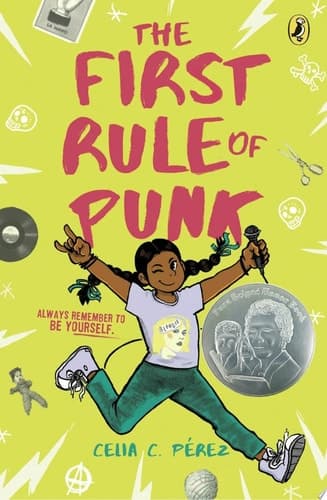
The First Rule of Punk is a wry and heartfelt exploration of friendship, finding your place, and learning to rock out like no one’s watching.
There are no shortcuts to surviving your first day at a new school—you can’t fix it with duct tape like you would your Chuck Taylors. On Day One, twelve-year-old Malú (María Luisa, if you want to annoy her) inadvertently upsets Posada Middle School’s queen bee, violates the school’s dress code with her punk rock look, and disappoints her college-professor mom in the process. Her dad, who now lives a thousand miles away, says things will get better as long as she remembers the first rule of punk: be yourself.
The real Malú loves rock music, skateboarding, zines, and Soyrizo (hold the cilantro, please). And when she assembles a group of like-minded misfits at school and starts a band, Malú finally begins to feel at home. She'll do anything to preserve this, which includes standing up to an anti-punk school administration to fight for her right to express herself!
Black and white illustrations and collage art by award-winning author Celia C. Pérez are featured throughout.
"Malú rocks!"
—Victoria Jamieson, author and illustrator of the New York Times bestselling and Newbery Honor-winning Roller Girl
Frequently asked questions
Is The First Rule of Punk appropriate for a 7-year-old?
No violence is depicted in the book. The story focuses on the protagonist's experiences with self-expression and identity rather than physical confrontations or violent scenarios. No scary content is present in the book. The story is light-hearted and focuses on the protagonist's journey in a new school environment.
Does The First Rule of Punk have violence?
No violence is depicted in the book. The story focuses on the protagonist's experiences with self-expression and identity rather than physical confrontations or violent scenarios.
Does The First Rule of Punk have scary content?
No scary content is present in the book. The story is light-hearted and focuses on the protagonist's journey in a new school environment.
Does The First Rule of Punk have religious themes?
No religious content is present in the book. The narrative centers on personal identity, family connections, and cultural experiences without reference to specific religious practices or beliefs.
Does The First Rule of Punk have racial/cultural content?
The book addresses themes of race and identity, particularly through the experiences of a Latina protagonist. It explores her struggles with cultural expectations and her identity as a Mexican-American girl, making race a central theme.
Does The First Rule of Punk have profanity?
No profanity is present in the book. The content is suitable for a younger audience, focusing on themes of friendship and self-identity.
Does The First Rule of Punk have climate change?
No climate themes are present in the book. The narrative focuses on personal and cultural identity rather than environmental issues.
Does The First Rule of Punk have sexual identity?
No sexual content is present in the book. The narrative is appropriate for middle-grade readers and does not include themes of sexuality.
Does The First Rule of Punk have gender roles?
The book critiques traditional gender roles through the protagonist's resistance to societal expectations of femininity, as she embraces her punk identity and challenges the notion of being a 'model señorita'. This promotes a modern feminist perspective.
Does The First Rule of Punk have lgbtq+ themes?
No LGBTQ+ themes are explicitly mentioned in the book's narrative. The focus is on a 12-year-old Latina girl navigating her identity and interests, particularly in punk culture, rather than on LGBTQ+ issues.