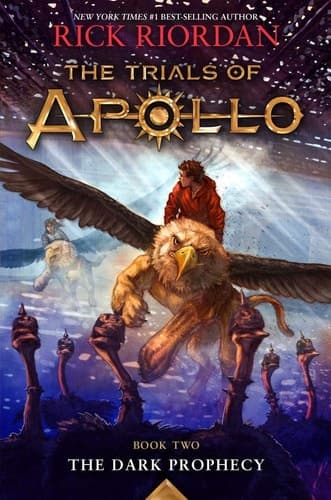
The Dark Prophecy (The Trials of Apollo, Book Two) — Content Guide for Parents
Themes present
Not found
Content themes
Factual summary of themes present in this book. No opinion — just the facts.
Get the full theme breakdown in the app
Detailed evidence, confidence ratings, and source citations for every theme.
Download for iOSExample theme card
Religious themes
PRESENTContains references to prayer and church attendance. A minister character plays a supporting role in two chapters.
About this book
Frequently asked questions
Is The Dark Prophecy (The Trials of Apollo, Book Two) appropriate for a 7-year-old?
The book contains scenes of arena fighting involving exotic and tortured animals, as well as the use of various weapons, leading to injuries. This depiction of violence is significant within the action-oriented narrative. While the book contains action and some intense moments, there is no genuinely frightening content that would cause fear or distress. The tone remains adventurous and suitable for its target audience.
Does The Dark Prophecy (The Trials of Apollo, Book Two) have violence?
The book contains scenes of arena fighting involving exotic and tortured animals, as well as the use of various weapons, leading to injuries. This depiction of violence is significant within the action-oriented narrative.
Does The Dark Prophecy (The Trials of Apollo, Book Two) have scary content?
While the book contains action and some intense moments, there is no genuinely frightening content that would cause fear or distress. The tone remains adventurous and suitable for its target audience.
Does The Dark Prophecy (The Trials of Apollo, Book Two) have religious themes?
The story incorporates elements of Greco-Roman mythology, with Apollo, a Greek god, as the narrator. This includes references to various mythological themes and characters, showcasing a blend of ancient mythology with modern storytelling.
Does The Dark Prophecy (The Trials of Apollo, Book Two) have racial/cultural content?
The book features a diverse cast of characters, but race is not a central theme or plot element. The narrative includes characters of various backgrounds without focusing on racial issues.
Does The Dark Prophecy (The Trials of Apollo, Book Two) have profanity?
The characters occasionally use mild profanities and substitute curse words with names of Greek gods and places. This includes phrases like 'what the Hades' and some name-calling, which is typical for the tone of the series.
Does The Dark Prophecy (The Trials of Apollo, Book Two) have climate change?
There are no themes related to climate activism or environmentalism present in the book. The narrative focuses primarily on mythology and character development.
Does The Dark Prophecy (The Trials of Apollo, Book Two) have sexual identity?
The narrative explores Apollo's bisexuality, including his attractions to both male and female characters. This aspect of his character is woven into the plot and contributes to the development of relationships within the story.
Does The Dark Prophecy (The Trials of Apollo, Book Two) have gender roles?
The book normalizes LGBTQ+ identities and presents a variety of relationships without traditional gender expectations. Apollo's bisexuality is integrated into the story without stigma, promoting a modern view of gender and sexuality.
Does The Dark Prophecy (The Trials of Apollo, Book Two) have lgbtq+ themes?
The book features several LGBTQ+ characters, including Emmie and Jo, who are both lesbians, and Apollo, who is bisexual. The narrative normalizes these identities without drawing excessive attention to them, presenting a diverse representation of sexuality.