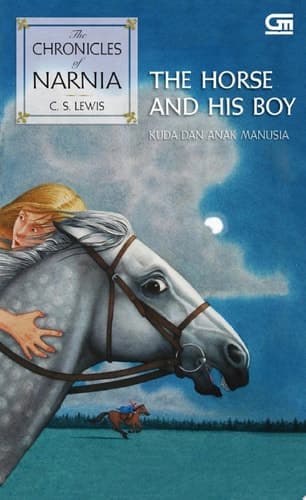
The Chronicles of Narnia: Kuda dan Anak Manusia (The Horse and His Boy) — Content Guide for Parents
Themes present
Not found
Content themes
Factual summary of themes present in this book. No opinion — just the facts.
Get the full theme breakdown in the app
Detailed evidence, confidence ratings, and source citations for every theme.
Download for iOSExample theme card
Religious themes
PRESENTContains references to prayer and church attendance. A minister character plays a supporting role in two chapters.
About this book
Frequently asked questions
Is The Chronicles of Narnia: Kuda dan Anak Manusia (The Horse and His Boy) appropriate for a 7-year-old?
The narrative includes instances of violence, including references to battles and the character Shasta being raised by an abusive fisherman. While the violence is not graphic, it is present in the context of the story. There are no genuinely frightening elements in the book. The themes and situations are adventurous but not designed to scare young readers.
Does The Chronicles of Narnia: Kuda dan Anak Manusia (The Horse and His Boy) have violence?
The narrative includes instances of violence, including references to battles and the character Shasta being raised by an abusive fisherman. While the violence is not graphic, it is present in the context of the story.
Does The Chronicles of Narnia: Kuda dan Anak Manusia (The Horse and His Boy) have scary content?
There are no genuinely frightening elements in the book. The themes and situations are adventurous but not designed to scare young readers.
Does The Chronicles of Narnia: Kuda dan Anak Manusia (The Horse and His Boy) have religious themes?
The book contains Christian allegorical elements, with themes of identity and humility that align with Christian teachings. The narrative reflects Lewis's Christian beliefs, portraying moral lessons consistent with Christian values.
Does The Chronicles of Narnia: Kuda dan Anak Manusia (The Horse and His Boy) have racial/cultural content?
The book features a mixed-race marriage between Aravis, a dark-skinned Calormene, and Shasta, a light-skinned Narnian. Discussions in external sources indicate that race is addressed, though interpretations of its portrayal vary.
Does The Chronicles of Narnia: Kuda dan Anak Manusia (The Horse and His Boy) have profanity?
The book does not contain profanity. Language used is appropriate for children, focusing on adventure and moral lessons.
Does The Chronicles of Narnia: Kuda dan Anak Manusia (The Horse and His Boy) have climate change?
There are no themes related to climate activism or environmentalism in 'The Horse and His Boy.' The story focuses on adventure and personal growth rather than ecological issues.
Does The Chronicles of Narnia: Kuda dan Anak Manusia (The Horse and His Boy) have sexual identity?
There is no explicit sexual content in 'The Horse and His Boy.' The relationships depicted are primarily familial or platonic, with no romantic or sexual themes explored.
Does The Chronicles of Narnia: Kuda dan Anak Manusia (The Horse and His Boy) have gender roles?
The book features strong female characters, such as Aravis, who plays a significant role in the narrative. Discussions about gender roles suggest that Lewis portrays women in positions of strength and agency, challenging traditional stereotypes.
Does The Chronicles of Narnia: Kuda dan Anak Manusia (The Horse and His Boy) have lgbtq+ themes?
No LGBTQ+ themes are explicitly present in 'The Horse and His Boy.' While there are discussions in external sources regarding interpretations of characters, these do not constitute actual content within the book itself.