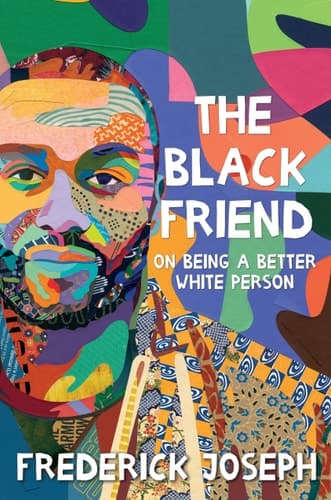
The Black Friend: On Being a Better White Person — Content Guide for Parents
Themes present
Not found
Content themes
Factual summary of themes present in this book. No opinion — just the facts.
Get the full theme breakdown in the app
Detailed evidence, confidence ratings, and source citations for every theme.
Download for iOSExample theme card
Religious themes
PRESENTContains references to prayer and church attendance. A minister character plays a supporting role in two chapters.
About this book
Writing from the perspective of a friend, Frederick Joseph offers candid reflections on his own experiences with racism and conversations with prominent artists and activists about theirs—creating an essential read for white people who are committed anti-racists and those newly come to the cause of racial justice.
“We don’t see color.” “I didn’t know Black people liked Star Wars!” “What hood are you from?” For Frederick Joseph, life as a transfer student in a largely white high school was full of wince-worthy moments that he often simply let go. As he grew older, however, he saw these as missed opportunities not only to stand up for himself, but to spread awareness to those white people who didn’t see the negative impact they were having.
Speaking directly to the reader, The Black Friend calls up race-related anecdotes from the author’s past, weaving in his thoughts on why they were hurtful and how he might handle things differently now. Each chapter features the voice of at least one artist or activist, including Angie Thomas, author of The Hate U Give; April Reign, creator of #OscarsSoWhite; Jemele Hill, sports journalist and podcast host; and eleven others. Touching on everything from cultural appropriation to power dynamics, “reverse racism” to white privilege, microaggressions to the tragic results of overt racism, this book serves as conversation starter, tool kit, and invaluable window into the life of a former “token Black kid” who now presents himself as the friend many readers need. Backmatter includes an encyclopedia of racism, providing details on relevant historical events, terminology, and more.
Frequently asked questions
Is The Black Friend: On Being a Better White Person appropriate for a 7-year-old?
The book references the murders of unarmed Black individuals by police and discusses the impact of systemic racism, including tense and scary situations experienced by the author and those he interviews. The narrative includes discussions of violent incidents and the fear associated with racism, which may be perceived as scary for readers, particularly when discussing real-life events.
Does The Black Friend: On Being a Better White Person have violence?
The book references the murders of unarmed Black individuals by police and discusses the impact of systemic racism, including tense and scary situations experienced by the author and those he interviews.
Does The Black Friend: On Being a Better White Person have scary content?
The narrative includes discussions of violent incidents and the fear associated with racism, which may be perceived as scary for readers, particularly when discussing real-life events.
Does The Black Friend: On Being a Better White Person have religious themes?
No religious content or themes detected in the book's narrative based on the search results.
Does The Black Friend: On Being a Better White Person have racial/cultural content?
The book centers on the author's experiences with racism and white supremacy, aiming to educate young white readers about systemic racism and anti-racism. It discusses historical and contemporary racial issues, making race a central theme.
Does The Black Friend: On Being a Better White Person have profanity?
No profanity detected in the book's narrative based on the search results.
Does The Black Friend: On Being a Better White Person have climate change?
No climate themes detected in the book's narrative based on the search results.
Does The Black Friend: On Being a Better White Person have sexual identity?
No sexual content detected in the book's narrative based on the search results.
Does The Black Friend: On Being a Better White Person have gender roles?
No specific gender roles or themes detected in the book's narrative based on the search results.
Does The Black Friend: On Being a Better White Person have lgbtq+ themes?
The book includes references to queer acceptance and discusses the perspectives of LGBTQ+ individuals, particularly in the context of race and social justice. It presents a framework for understanding intersectionality in anti-racist work.