THE AUSTERE ACADEMY Book the Fifth — Content Guide for Parents
Themes present
Not found
Content themes
Factual summary of themes present in this book. No opinion — just the facts.
Get the full theme breakdown in the app
Detailed evidence, confidence ratings, and source citations for every theme.
Download for iOSExample theme card
Religious themes
PRESENTContains references to prayer and church attendance. A minister character plays a supporting role in two chapters.
About this book
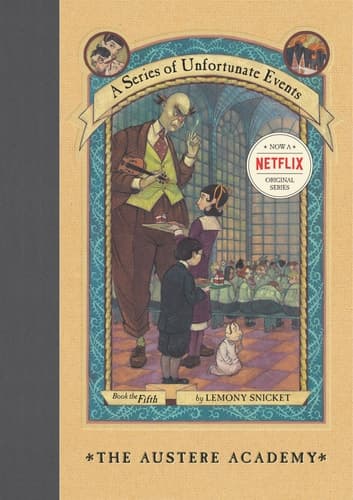
As the three Baudelaire orphans warily approach their new home Prufrock Preparatory School, they can't help but notice the enormous stone arch bearing the school's motto Memento Mori or "Remember you will die."
This is not a cheerful greeting and certainly marks an inauspicious beginning to a very bleak story just as we have come to expect from Lemony Snicket's A Series of Unfortunate Events, the deliciously morbid set of books that began with The Bad Beginning and only got worse.
Frequently asked questions
Is THE AUSTERE ACADEMY Book the Fifth appropriate for a 7-year-old?
The book features themes of abuse and neglect, particularly regarding the treatment of the Baudelaire orphans at the hands of the school's staff. The narrative includes elements that could be considered disturbing for children, such as the presence of monstrous employees overseeing the school. The book contains elements that may be considered scary for younger readers, including a dark and depressing atmosphere, as well as the ominous motto of the school, 'Memento Mori' (Remember you will die). These themes may evoke fear or discomfort in some children.
Does THE AUSTERE ACADEMY Book the Fifth have violence?
The book features themes of abuse and neglect, particularly regarding the treatment of the Baudelaire orphans at the hands of the school's staff. The narrative includes elements that could be considered disturbing for children, such as the presence of monstrous employees overseeing the school.
Does THE AUSTERE ACADEMY Book the Fifth have scary content?
The book contains elements that may be considered scary for younger readers, including a dark and depressing atmosphere, as well as the ominous motto of the school, 'Memento Mori' (Remember you will die). These themes may evoke fear or discomfort in some children.
Does THE AUSTERE ACADEMY Book the Fifth have religious themes?
No religious content is present in 'The Austere Academy'. The search results reference other books in the series and general reviews but do not indicate any religious themes or practices in this specific book.
Does THE AUSTERE ACADEMY Book the Fifth have racial/cultural content?
Race is not a central theme or plot element in 'The Austere Academy'. The search results do not indicate any discussions or representations related to race within the narrative.
Does THE AUSTERE ACADEMY Book the Fifth have profanity?
No profanity is present in 'The Austere Academy'. The book is aimed at children and maintains an appropriate vocabulary without the inclusion of any curse words or strong language.
Does THE AUSTERE ACADEMY Book the Fifth have climate change?
There are no themes related to climate or environmental issues in 'The Austere Academy'. The search results do not indicate any discussions on climate within the book.
Does THE AUSTERE ACADEMY Book the Fifth have sexual identity?
There is no sexual content in 'The Austere Academy'. The search results do not indicate any themes related to sexuality or sexual behavior within the book.
Does THE AUSTERE ACADEMY Book the Fifth have gender roles?
The book features both male and female characters, including brave and intelligent children, but it does not actively discuss or critique gender roles. The narrative focuses on the adventures of the Baudelaire orphans rather than gender dynamics.
Does THE AUSTERE ACADEMY Book the Fifth have lgbtq+ themes?
No LGBTQ+ themes or characters are explicitly mentioned in the book 'The Austere Academy'. The search results include references to other works and general discussions about LGBTQ+ representation in literature, but not specifically in this book.