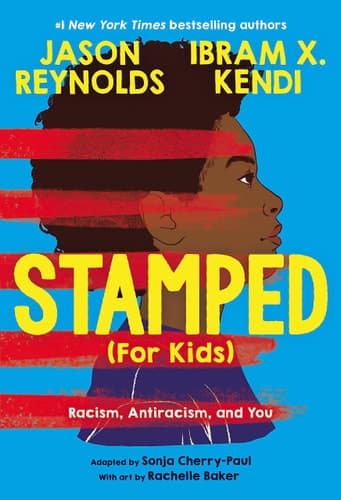
Stamped (for Kids) Racism, Antiracism, and You — Content Guide for Parents
Themes present
Not found
Content themes
Factual summary of themes present in this book. No opinion — just the facts.
Get the full theme breakdown in the app
Detailed evidence, confidence ratings, and source citations for every theme.
Download for iOSExample theme card
Religious themes
PRESENTContains references to prayer and church attendance. A minister character plays a supporting role in two chapters.
About this book
This chapter book edition of the groundbreaking #1 bestseller by luminaries Ibram X. Kendi and Jason Reynolds is an essential introduction to the history of racism and antiracism in America
RACE. Uh-oh. The R-word.
But actually talking about race is one of the most important things to learn how to do.
Adapted from the award-winning, bestselling Stamped: Racism, Antiracism, and You, this book takes readers on a journey from present to past and back again. Kids will discover where racist ideas came from, identify how they impact America today, and meet those who have fought racism with antiracism. Along the way, they'll learn how to identify and stamp out racist thoughts in their own lives.
Ibram X. Kendi's research, Jason Reynolds's and Sonja Cherry-Paul's writing, and Rachelle Baker's art come together in this vital read, enhanced with a glossary, timeline, and more.
Frequently asked questions
Is Stamped (for Kids) Racism, Antiracism, and You appropriate for a 7-year-old?
The book includes mentions of historical and contemporary violence related to racism, such as lynching, police brutality, and specific cases like the killings of Emmett Till and George Floyd. This framing presents violence as a significant aspect of the discussion on racism in America. No scary content detected in search results.
Does Stamped (for Kids) Racism, Antiracism, and You have violence?
The book includes mentions of historical and contemporary violence related to racism, such as lynching, police brutality, and specific cases like the killings of Emmett Till and George Floyd. This framing presents violence as a significant aspect of the discussion on racism in America.
Does Stamped (for Kids) Racism, Antiracism, and You have scary content?
No scary content detected in search results.
Does Stamped (for Kids) Racism, Antiracism, and You have religious themes?
The book discusses the historical use of religion to justify racism, including claims that enslaving Africans was a mission from God. This framing critiques the role of religion in supporting racist ideologies, specifically Christianity.
Does Stamped (for Kids) Racism, Antiracism, and You have racial/cultural content?
The book serves as a history of ideas about race in the United States, discussing systemic racism and the impact of racist ideas on society. It emphasizes the importance of understanding these concepts to combat racism effectively.
Does Stamped (for Kids) Racism, Antiracism, and You have profanity?
No profanity detected in search results.
Does Stamped (for Kids) Racism, Antiracism, and You have climate change?
No climate themes detected in search results.
Does Stamped (for Kids) Racism, Antiracism, and You have sexual identity?
No sexual content detected in search results.
Does Stamped (for Kids) Racism, Antiracism, and You have gender roles?
No specific gender roles detected in search results.
Does Stamped (for Kids) Racism, Antiracism, and You have lgbtq+ themes?
The book mentions Black LGBTQ+ leaders, specifically referencing figures like Bayard Rustin and James Baldwin, highlighting their contributions to the civil rights movement. This inclusion suggests a normalization of LGBTQ+ identities within the context of anti-racism and civil rights.