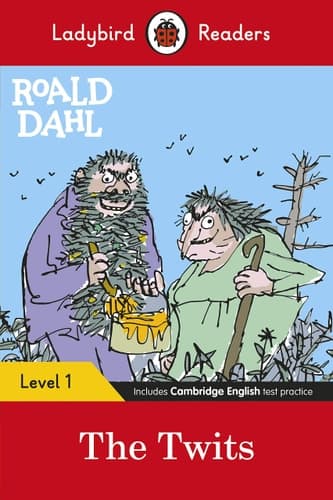
Roald Dahl The Twits — Content Guide for Parents
Themes present
Not found
Content themes
Factual summary of themes present in this book. No opinion — just the facts.
Get the full theme breakdown in the app
Detailed evidence, confidence ratings, and source citations for every theme.
Download for iOSExample theme card
Religious themes
PRESENTContains references to prayer and church attendance. A minister character plays a supporting role in two chapters.
About this book
Beautifully illustrated and carefully written by language learning experts, the series combines the best of Ladybird content with the structured language progression that will help children develop their reading, writing, speaking, listening and critical thinking skills.
The eight levels follow the Common European Framework of Reference for language learning (CEFR) and include language activities that provide preparation for the Cambridge English Pre-A1 to A2 (YLE) tests.
Visit the Ladybird Readers website for more information. The unique code provided in each printed book will provide access to audio, extra activities and learning resources.
The Twits, a Level 1 Reader, is Pre-A1 in the CEFR framework and includes practice for the Cambridge English Pre-A1 Starters tests. Short sentences contain a maximum of two clauses, using the present tense and some simple adjectives.
Mr. and Mrs. Twit are not nice people. What do the monkeys do? What does the bird do?
Frequently asked questions
Is Roald Dahl The Twits appropriate for a 7-year-old?
The book contains themes of domestic violence, gaslighting, and attempted murder as Mr. and Mrs. Twit engage in cruel and abusive behaviors towards each other and the animals they keep captive. This portrayal of their actions is central to the narrative. The book does not contain genuinely frightening content. While the characters engage in nasty tricks and gross humor, it is presented in a comedic manner that is not intended to scare children.
Does Roald Dahl The Twits have violence?
The book contains themes of domestic violence, gaslighting, and attempted murder as Mr. and Mrs. Twit engage in cruel and abusive behaviors towards each other and the animals they keep captive. This portrayal of their actions is central to the narrative.
Does Roald Dahl The Twits have scary content?
The book does not contain genuinely frightening content. While the characters engage in nasty tricks and gross humor, it is presented in a comedic manner that is not intended to scare children.
Does Roald Dahl The Twits have religious themes?
No religious content in the book itself. The search results include references to the author's background and other works, but do not provide evidence of religious themes or practices in 'The Twits'.
Does Roald Dahl The Twits have racial/cultural content?
The book does not address race as a central theme or plot point. The search results mention the author's controversial views on race but do not provide evidence of racial themes in 'The Twits'.
Does Roald Dahl The Twits have profanity?
No profanity is present in the book. The language used is appropriate for children, focusing on humor and the characters' antics rather than offensive language.
Does Roald Dahl The Twits have climate change?
No climate themes are present in the book. The search results reference environmental issues in adaptations but do not indicate that these themes are part of the original narrative of 'The Twits'.
Does Roald Dahl The Twits have sexual identity?
No sexual content is present in the book. While there are mentions of gross-out humor, such as bodily functions, there are no references to sexual themes or content in the narrative.
Does Roald Dahl The Twits have gender roles?
The book does not actively discuss or critique gender roles. While it features a male and female character in Mr. and Mrs. Twit, their portrayal as cruel and unkempt does not promote traditional gender roles or feminist themes.
Does Roald Dahl The Twits have lgbtq+ themes?
No LGBTQ+ themes or characters are present in the book 'The Twits'. The search results primarily reference adaptations and discussions of other works by Roald Dahl, which are not relevant to the content of this specific book.