Red A Crayon's Story — Content Guide for Parents
Themes present
Not found
Content themes
Factual summary of themes present in this book. No opinion — just the facts.
Get the full theme breakdown in the app
Detailed evidence, confidence ratings, and source citations for every theme.
Download for iOSExample theme card
Religious themes
PRESENTContains references to prayer and church attendance. A minister character plays a supporting role in two chapters.
About this book
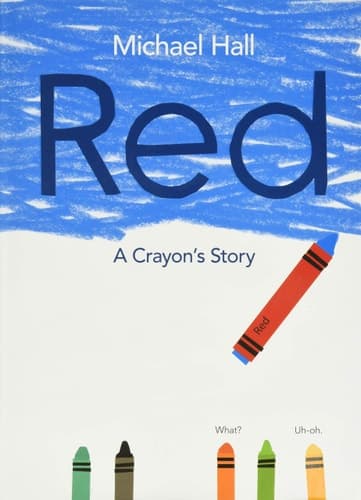
A blue crayon mistakenly labeled as "red" suffers an identity crisis in this picture book by the New York Times–bestselling creator of My Heart Is Like a Zoo and It's an Orange Aardvark! Funny, insightful, and colorful, Red: A Crayon's Story, by Michael Hall, is about being true to your inner self and following your own path despite obstacles that may come your way. Red will appeal to fans of Lois Ehlert, Eric Carle, and The Day the Crayons Quit, and makes a great gift for readers of any age!
Red has a bright red label, but he is, in fact, blue. His teacher tries to help him be red (let's draw strawberries!), his mother tries to help him be red by sending him out on a playdate with a yellow classmate (go draw a nice orange!), and the scissors try to help him be red by snipping his label so that he has room to breathe. But Red is miserable. He just can't be red, no matter how hard he tries! Finally, a brand-new friend offers a brand-new perspective, and Red discovers what readers have known all along. He's blue! This funny, heartwarming, colorful picture book about finding the courage to be true to your inner self can be read on multiple levels, and it offers something for everyone.
Frequently asked questions
Is Red A Crayon's Story appropriate for a 7-year-old?
No violence is depicted in the book's narrative. The story focuses on themes of identity and acceptance without any violent content. The book does not contain scary content. It is described as a kid-friendly story that encourages self-acceptance.
Does Red A Crayon's Story have violence?
No violence is depicted in the book's narrative. The story focuses on themes of identity and acceptance without any violent content.
Does Red A Crayon's Story have scary content?
The book does not contain scary content. It is described as a kid-friendly story that encourages self-acceptance.
Does Red A Crayon's Story have religious themes?
No religious practices, beliefs, or ceremonies are present in the narrative of the book. Discussions about religion in reviews do not reflect content from the book itself.
Does Red A Crayon's Story have racial/cultural content?
Race is not a central theme or plot element in the book. The focus is on identity and self-acceptance rather than racial issues.
Does Red A Crayon's Story have profanity?
There is no profanity in the book. The narrative is suitable for children and does not include any inappropriate language.
Does Red A Crayon's Story have climate change?
There are no climate themes present in the narrative. The story focuses on identity rather than environmental issues.
Does Red A Crayon's Story have sexual identity?
The book does not contain any sexual content. It addresses themes of identity and self-acceptance appropriate for a children's audience.
Does Red A Crayon's Story have gender roles?
The book critiques traditional gender roles by illustrating that Red, despite being labeled as red, is actually blue. This challenges societal expectations and promotes the importance of recognizing and celebrating one's true identity, suggesting a modern feminist perspective.
Does Red A Crayon's Story have lgbtq+ themes?
The story features a crayon named Red who is labeled as red but is actually blue, symbolizing the experience of being transgender or gender non-conforming. The narrative promotes the idea of being true to oneself despite societal labels, aligning with LGBTQ+ themes of identity and acceptance.