Race Against Death The Greatest POW Rescue of World War II — Content Guide for Parents
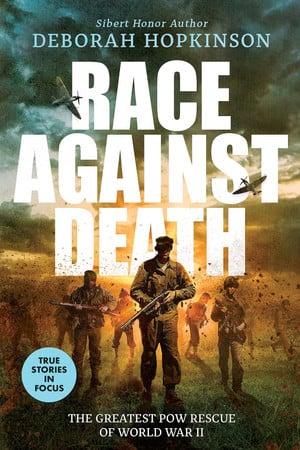
Found in this book
- ViolenceCentral
- Scary contentSupporting
- Race & cultureSupporting
- ProfanityBrief
Not found
- Religion
- Climate
- Sexual content
- Gender roles
- Gender & orientation
Content themes
Factual summary of themes present in this book. No opinion — just the facts.
Get the full theme breakdown in the app
Summaries and source quotes for every theme.
Download for iOSExample theme card
Religion
PRESENTContains references to prayer and church attendance. A minister character plays a supporting role in two chapters.
About this book
Scholastic Focus is the premier home of thoroughly researched, beautifully written, and thoughtfully designed works of narrative nonfiction aimed at middle-grade and young adult readers. These books help readers learn about the world in which they live and develop their critical thinking skills so that they may become dynamic citizens who are able to analyze and understand our past, participate in essential discussions about our present, and work to grow and build our future.
Following the bombing of Pearl Harbor, America entered World War II, and a new theater of battle opened up in the Pacific. But US troops, along with thousands of Filipino soldiers who fought alongside them, were overtaken in the Philippines by a fiercely determined Japanese navy, and many Americans and Filipino fighters were killed or captured.
These American and Filipino prisoners of war were forced to endure the most horrific conditions on the deadly trek known as the Bataan Death March. Then, the American servicemen who were held captive by the Japanese military in Cabanatuan Camp and others in the Philippines, faced beatings, starvation, and tropical diseases, and lived constantly under the threat of death.
Unable to forget their comrades' fate and concerned that these POWs would be brutally murdered as the tides of war shifted in the Pacific, the US Army Rangers undertook one of the most daring and dangerous rescue missions of all time. Aided by the "Angels of the Underground," the Sixth Ranger Battalion and courageous Filipino guerrilla soldiers set out on an uncertain and treacherous assignment. Often called the Great Raid, this remarkable story remains largely forgotten.
Sibert Honor author Deborah Hopkinson presents an extraordinary and unflinching look at the heroic servicemen and women who courageously weathered the worst of circumstances and conditions in service to their country, as well as those who answered the call to save their fellow soldiers.
Frequently asked questions
Is Race Against Death The Greatest POW Rescue of World War II appropriate for a 7-year-old?
The book recounts the Bataan Death March, beatings, torture and killing of prisoners, and the armed rescue raid on the camp. The book describes grim conditions such as death, disease, starvation and abuse in the prison camps, which one reader found a little graphic for age 9.
Does Race Against Death The Greatest POW Rescue of World War II have violence?
Found (Central): The book recounts the Bataan Death March, beatings, torture and killing of prisoners, and the armed rescue raid on the camp.
Does Race Against Death The Greatest POW Rescue of World War II have scary content?
Found (Supporting): The book describes grim conditions such as death, disease, starvation and abuse in the prison camps, which one reader found a little graphic for age 9.
Does Race Against Death The Greatest POW Rescue of World War II have religion?
Not found in the sources we checked.
Does Race Against Death The Greatest POW Rescue of World War II have race & culture?
Found (Supporting): The book includes Filipino and Latino soldiers from New Mexico and notes the racist treatment of Japanese Americans during the war, while the prisoners suffer brutal treatment from Japanese guards in a story of wartime persecution.
Does Race Against Death The Greatest POW Rescue of World War II have profanity?
Found (Brief): A review notes some mild swear words are quoted in the text, shown in censored form.
Does Race Against Death The Greatest POW Rescue of World War II have climate?
Not found in the sources we checked.
Does Race Against Death The Greatest POW Rescue of World War II have sexual content?
Not found in the sources we checked.
Does Race Against Death The Greatest POW Rescue of World War II have gender roles?
Not found in the sources we checked.
Does Race Against Death The Greatest POW Rescue of World War II have gender & orientation?
Not found in the sources we checked.