P.S. I Still Love You — Content Guide for Parents
Themes present
Not found
Content themes
Factual summary of themes present in this book. No opinion — just the facts.
Get the full theme breakdown in the app
Detailed evidence, confidence ratings, and source citations for every theme.
Download for iOSExample theme card
Religious themes
PRESENTContains references to prayer and church attendance. A minister character plays a supporting role in two chapters.
About this book
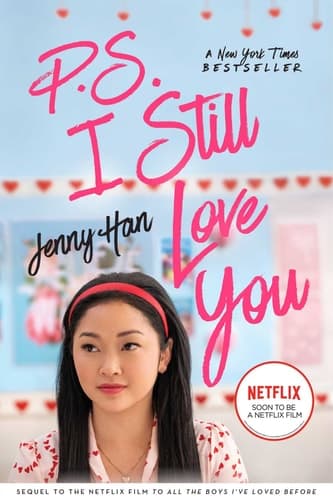
In this highly anticipated sequel to the “lovely, lighthearted” (School Library Journal) New York Times bestselling To All The Boys I’ve Loved Before, Lara Jean still has letters to write and even more to lose when it comes to love.
Lara Jean didn’t expect to really fall for Peter.
She and Peter were just pretending. Except suddenly they weren’t. Now Lara Jean is more confused than ever.
When another boy from her past returns to her life, Lara Jean’s feelings for him return too. Can a girl be in love with two boys at once?
In this charming and heartfelt sequel to the New York Times bestseller To All the Boys I’ve Loved Before, we see first love through the eyes of the unforgettable Lara Jean. Love is never easy, but maybe that’s part of what makes it so amazing.
Frequently asked questions
Is P.S. I Still Love You appropriate for a 7-year-old?
There is no evidence of violence in the book. The content primarily revolves around romance and personal relationships without any physical altercations or violent incidents. There is no scary content in the book. The narrative focuses on romance and personal growth without any elements designed to frighten the reader.
Does P.S. I Still Love You have violence?
There is no evidence of violence in the book. The content primarily revolves around romance and personal relationships without any physical altercations or violent incidents.
Does P.S. I Still Love You have scary content?
There is no scary content in the book. The narrative focuses on romance and personal growth without any elements designed to frighten the reader.
Does P.S. I Still Love You have religious themes?
No religious content in the book itself. The search results do not indicate any religious practices, beliefs, or ceremonies present in the narrative.
Does P.S. I Still Love You have racial/cultural content?
The search results do not indicate any explicit themes of race or racism within the book's narrative. While the protagonist is of mixed heritage, race is not a central theme or plot point.
Does P.S. I Still Love You have profanity?
The narrative includes mild swearing, with specific mentions of words like 's--t' and 'f--k'. This indicates that the book contains some level of profanity that may be considered inappropriate for younger readers.
Does P.S. I Still Love You have climate change?
There are no themes related to climate change or environmentalism in the book. The narrative does not address climate issues or activism.
Does P.S. I Still Love You have sexual identity?
The book includes discussions about sex and contains mature themes such as kissing and relationships. It features conversations about making out and rumors regarding sexual activity, indicating a focus on teenage romance and sexuality.
Does P.S. I Still Love You have gender roles?
The book discusses gender expectations and includes feminist themes, particularly in the context of teenage relationships. It addresses double standards between genders, suggesting a critique of traditional gender roles.
Does P.S. I Still Love You have lgbtq+ themes?
The book features a character named Cass who is described as proudly queer. This representation is explicit within the narrative, indicating a positive portrayal of LGBTQ+ identities.