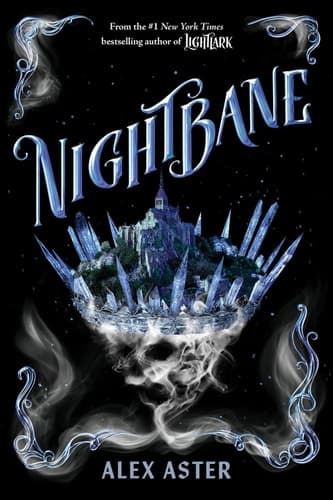
Nightbane — Content Guide for Parents
Themes present
Not found
Content themes
Factual summary of themes present in this book. No opinion — just the facts.
Get the full theme breakdown in the app
Detailed evidence, confidence ratings, and source citations for every theme.
Download for iOSExample theme card
Religious themes
PRESENTContains references to prayer and church attendance. A minister character plays a supporting role in two chapters.
About this book
The seductive and action-packed follow-up to Alex Aster's instant #1 New York Times, #1 Wall Street Journal, and internationally bestselling novel, Lightlark
Isla Crown has secured the love of two powerful rulers and broken the curses that plagued the six realms for centuries, but few know the true origins of her powers.
Now, in the wake of a crushing betrayal, Isla finds herself hungry for distraction, preferring to frequent Lightlark's seductive haunts instead of embracing her duties as the newly crowned leader of two separate realms. Worse, her fellow rulers haven't ceded victory quietly, and there are others in Isla's midst who don't believe her ascent to power was earned.
As certain death races toward Lightlark and secrets from the past begin to unravel, Isla must weigh her responsibility to her people against the whims of the most dangerous traitor of all: her heart.
Alex Aster's intricate world expands after the riveting culmination of the Centennial games, delving more deeply into Isla's memories of her past, as her future hurtles toward two possible fates.
Filled with secrets, deception, romance, and twists worthy of the darkest thrillers, The Lightlark Sagais a must-read for fans of legendary fantasy writers Marie Lu, Marissa Meyer, and Leigh Bardugo.
Frequently asked questions
Is Nightbane appropriate for a 7-year-old?
The book contains significant fantasy violence, including descriptions of blood, pain, and killing, with details such as blood splattering and bones crunching. Themes of murder, injury, and death are prevalent throughout the narrative. While the book contains violent and intense scenes, there is no mention of genuinely frightening content that would cause fear or distress. The violence is framed within a fantasy context.
Does Nightbane have violence?
The book contains significant fantasy violence, including descriptions of blood, pain, and killing, with details such as blood splattering and bones crunching. Themes of murder, injury, and death are prevalent throughout the narrative.
Does Nightbane have scary content?
While the book contains violent and intense scenes, there is no mention of genuinely frightening content that would cause fear or distress. The violence is framed within a fantasy context.
Does Nightbane have religious themes?
No religious content in the book itself. The narrative focuses on a fantasy world with curses and kingdoms but does not include any religious practices or beliefs.
Does Nightbane have racial/cultural content?
The book mentions a variety of skin and hair colors among characters, but race is not a central theme or plot point. The narrative does not address racism or racial issues explicitly.
Does Nightbane have profanity?
No profanity is explicitly mentioned in the search results. The focus is on fantasy violence and sexual content rather than the use of curse words.
Does Nightbane have climate change?
No climate themes or environmental issues are mentioned in the search results. The narrative focuses on fantasy elements rather than real-world climate discussions.
Does Nightbane have sexual identity?
The book includes explicit descriptions of sexual activity, such as kissing, caressing, and intercourse, without naming specific body parts. It models consent and explores complex relationships among characters.
Does Nightbane have gender roles?
The book includes same-gender attraction and marriage in a normal context, but it does not actively discuss or critique gender roles. The portrayal of characters does not promote traditional or modern gender roles as a central theme.
Does Nightbane have lgbtq+ themes?
The book features LGBTQ+ characters, including Azul, a gay man, Cleo, a bisexual woman, and Enya, a lesbian. These characters are depicted in a way that normalizes their identities, though they do not engage in romantic relationships within the story.