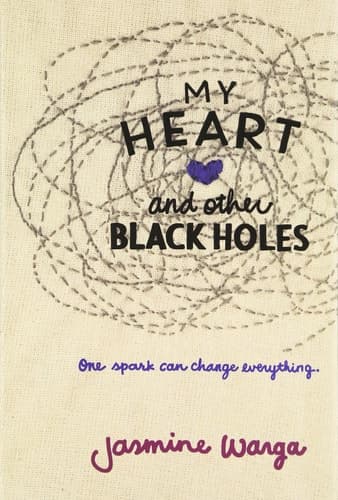
My Heart and Other Black Holes — Content Guide for Parents
Themes present
Not found
Content themes
Factual summary of themes present in this book. No opinion — just the facts.
Get the full theme breakdown in the app
Detailed evidence, confidence ratings, and source citations for every theme.
Download for iOSExample theme card
Religious themes
PRESENTContains references to prayer and church attendance. A minister character plays a supporting role in two chapters.
About this book
A stunning novel about the transformative power of love, perfect for fans of 13 Reasons Why by Jay Asher.
Sixteen-year-old physics nerd Aysel is obsessed with plotting her own death. With a mother who can barely look at her without wincing, classmates who whisper behind her back, and a father whose violent crime rocked her small town, Aysel is ready to turn her potential energy into nothingness.
There’s only one problem: she’s not sure she has the courage to do it alone. But once she discovers a website with a section called Suicide Partners, Aysel’s convinced she’s found her solution—Roman, a teenage boy who’s haunted by a family tragedy, is looking for a partner.
Even though Aysel and Roman have nothing in common, they slowly start to fill in each other’s broken lives. But as their suicide pact becomes more concrete, Aysel begins to question whether she really wants to go through with it. Ultimately, she must choose between wanting to die or trying to convince Roman to live so they can discover the potential of their energy together.
Frequently asked questions
Is My Heart and Other Black Holes appropriate for a 7-year-old?
The book addresses themes of adolescent depression and suicide, which are inherently violent topics. The narrative includes a suicide pact between two teenagers, framing the emotional turmoil and struggles they face. The search results do not indicate any elements of horror or frightening content within the narrative of the book.
Does My Heart and Other Black Holes have violence?
The book addresses themes of adolescent depression and suicide, which are inherently violent topics. The narrative includes a suicide pact between two teenagers, framing the emotional turmoil and struggles they face.
Does My Heart and Other Black Holes have scary content?
The search results do not indicate any elements of horror or frightening content within the narrative of the book.
Does My Heart and Other Black Holes have religious themes?
No religious practices, beliefs, or ceremonies are mentioned in the narrative of the book. The author's background does not influence the content.
Does My Heart and Other Black Holes have racial/cultural content?
While the author has a diverse background, the narrative does not focus on race as a central theme or plot element.
Does My Heart and Other Black Holes have profanity?
No instances of profanity are noted in the search results related to the book's content.
Does My Heart and Other Black Holes have climate change?
No themes related to climate, environmentalism, or activism are mentioned in the search results regarding the book's content.
Does My Heart and Other Black Holes have sexual identity?
No explicit sexual content is mentioned in the search results. The focus is primarily on mental health and emotional struggles rather than sexual themes.
Does My Heart and Other Black Holes have gender roles?
The search results do not indicate any specific framing of gender roles within the narrative. The focus is primarily on mental health and personal identity.
Does My Heart and Other Black Holes have lgbtq+ themes?
The protagonist, Cass, is described as proudly queer, indicating that LGBTQ+ identity is a significant aspect of the character's identity within the narrative. This representation normalizes queer identity in the context of the story.