More Tales to Give You Goosebumps Ten Spooky Stories — Content Guide for Parents
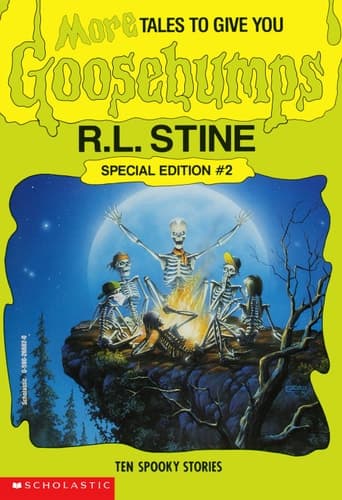
Themes present
Not found
Content themes
Factual summary of themes present in this book. No opinion — just the facts.
Get the full theme breakdown in the app
Detailed evidence, confidence ratings, and source citations for every theme.
Download for iOSExample theme card
Religious themes
PRESENTContains references to prayer and church attendance. A minister character plays a supporting role in two chapters.
About this book
Frequently asked questions
Is More Tales to Give You Goosebumps Ten Spooky Stories appropriate for a 7-year-old?
The book contains spooky stories that involve children in potentially dangerous situations, such as being threatened by monsters or supernatural elements. While the violence is not graphic, it does include suspenseful scenarios that may be intense for younger readers. The book is designed to be spooky and includes elements that could be frightening for children, such as monsters and eerie situations. The stories are intended to give readers goosebumps, which aligns with the book's theme of light horror.
Does More Tales to Give You Goosebumps Ten Spooky Stories have violence?
The book contains spooky stories that involve children in potentially dangerous situations, such as being threatened by monsters or supernatural elements. While the violence is not graphic, it does include suspenseful scenarios that may be intense for younger readers.
Does More Tales to Give You Goosebumps Ten Spooky Stories have scary content?
The book is designed to be spooky and includes elements that could be frightening for children, such as monsters and eerie situations. The stories are intended to give readers goosebumps, which aligns with the book's theme of light horror.
Does More Tales to Give You Goosebumps Ten Spooky Stories have religious themes?
No religious content in the book itself. The search results do not indicate any religious themes, practices, or beliefs present in the stories.
Does More Tales to Give You Goosebumps Ten Spooky Stories have racial/cultural content?
No explicit racial themes are present in the book. The search results do not indicate that race is a central theme or plot point in the stories.
Does More Tales to Give You Goosebumps Ten Spooky Stories have profanity?
No profanity is mentioned in the book. The search results suggest that the language used is appropriate for children, focusing on spooky themes without inappropriate language.
Does More Tales to Give You Goosebumps Ten Spooky Stories have climate change?
No climate themes or environmental issues are addressed in the book. The search results focus on the spooky and supernatural elements of the stories without reference to climate topics.
Does More Tales to Give You Goosebumps Ten Spooky Stories have sexual identity?
No sexual content is present in the book. The search results indicate that the stories are suitable for a younger audience and do not include themes related to sexuality.
Does More Tales to Give You Goosebumps Ten Spooky Stories have gender roles?
The book features a variety of child characters, both male and female, but does not actively discuss or promote specific gender roles. The focus is on spooky stories rather than on gender dynamics.
Does More Tales to Give You Goosebumps Ten Spooky Stories have lgbtq+ themes?
No LGBTQ+ themes or characters are mentioned in the book's narrative. The search results primarily focus on general information about LGBTQ+ representation in literature, which is not relevant to this specific book.