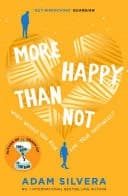
More Happy Than Not The much-loved hit from the author of No.1 bestselling blockbuster THEY BOTH DIE AT THE END! — Content Guide for Parents
Themes present
Not found
Content themes
Factual summary of themes present in this book. No opinion — just the facts.
Get the full theme breakdown in the app
Detailed evidence, confidence ratings, and source citations for every theme.
Download for iOSExample theme card
Religious themes
PRESENTContains references to prayer and church attendance. A minister character plays a supporting role in two chapters.
About this book
Please note that covers may vary.
Life hasn’t been easy for sixteen‑year‑old Aaron Soto, but with the help of his girlfriend, Genevieve, he’s slowly remembering what happiness might feel like. Then Thomas shows up . . . Thomas is smart and funny, and before long Aaron is spending all his time with him. But as Aaron’s feelings for Thomas intensify, tensions with his other friends start to build. Soon Aaron is faced with a choice – one that will make him question what it is he wants, and how far he’ll go to get it.
PRAISE FOR MORE HAPPY THAN NOT:
'Silvera managed to leave me smiling after totally breaking my heart. Unforgettable.' Becky Albertalli, author of Simon vs. The Homo Sapiens Agenda
'Gut-wrenching' Guardian
'Mandatory reading' New York Times
Frequently asked questions
Is More Happy Than Not The much-loved hit from the author of No.1 bestselling blockbuster THEY BOTH DIE AT THE END! appropriate for a 7-year-old?
The book includes elements of violence, such as references to the violent death of friends and the emotional impact of trauma, but does not depict graphic violence. No scary content or themes detected in the book's narrative based on the search results.
Does More Happy Than Not The much-loved hit from the author of No.1 bestselling blockbuster THEY BOTH DIE AT THE END! have violence?
The book includes elements of violence, such as references to the violent death of friends and the emotional impact of trauma, but does not depict graphic violence.
Does More Happy Than Not The much-loved hit from the author of No.1 bestselling blockbuster THEY BOTH DIE AT THE END! have scary content?
No scary content or themes detected in the book's narrative based on the search results.
Does More Happy Than Not The much-loved hit from the author of No.1 bestselling blockbuster THEY BOTH DIE AT THE END! have religious themes?
No religious content or themes detected in the book's narrative based on the search results.
Does More Happy Than Not The much-loved hit from the author of No.1 bestselling blockbuster THEY BOTH DIE AT THE END! have racial/cultural content?
While the protagonist is from the Bronx and the author is of Puerto Rican descent, race is not a central theme or plot element in the narrative.
Does More Happy Than Not The much-loved hit from the author of No.1 bestselling blockbuster THEY BOTH DIE AT THE END! have profanity?
The book features strong language, including words such as 'f--k' and 's--t', reflecting the realistic dialogue of the characters.
Does More Happy Than Not The much-loved hit from the author of No.1 bestselling blockbuster THEY BOTH DIE AT THE END! have climate change?
No climate-related themes or discussions detected in the book's narrative based on the search results.
Does More Happy Than Not The much-loved hit from the author of No.1 bestselling blockbuster THEY BOTH DIE AT THE END! have sexual identity?
The narrative includes discussions of virginity, masturbation, and both straight and gay sexual experiences, indicating a frank approach to sexual themes appropriate for a young adult audience.
Does More Happy Than Not The much-loved hit from the author of No.1 bestselling blockbuster THEY BOTH DIE AT THE END! have gender roles?
The book does not promote traditional gender roles or modern feminist themes as a central aspect of the narrative.
Does More Happy Than Not The much-loved hit from the author of No.1 bestselling blockbuster THEY BOTH DIE AT THE END! have lgbtq+ themes?
The protagonist, Aaron, grapples with his sexual identity, questioning whether he is straight, bi, or gay. The narrative explores themes of self-acceptance and the desire to suppress one's true identity, particularly in the context of a procedure that could erase memories of being gay.