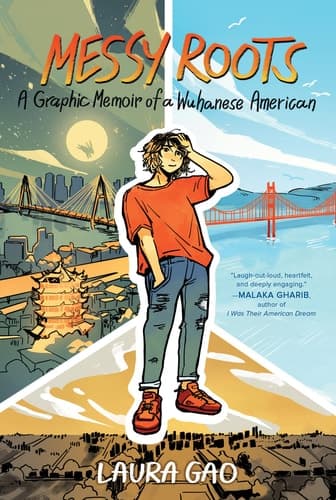
Messy Roots: A Graphic Memoir of a Wuhanese American — Content Guide for Parents
Themes present
Not found
Content themes
Factual summary of themes present in this book. No opinion — just the facts.
Get the full theme breakdown in the app
Detailed evidence, confidence ratings, and source citations for every theme.
Download for iOSExample theme card
Religious themes
PRESENTContains references to prayer and church attendance. A minister character plays a supporting role in two chapters.
About this book
"Messy Roots is a laugh-out-loud, heartfelt, and deeply engaging story of their journey to find themself--as an American, as the daughter of Chinese immigrants, as a queer person, and as a Wuhanese American in the middle of a pandemic."--Malaka Gharib, author of I Was Their American Dream
After spending her early years in Wuhan, China, riding water buffalos and devouring stinky tofu, Laura immigrates to Texas, where her hometown is as foreign as Mars--at least until 2020, when COVID-19 makes Wuhan a household name.
In Messy Roots, Laura illustrates her coming-of-age as the girl who simply wants to make the basketball team, escape Chinese school, and figure out why girls make her heart flutter.
Insightful, original, and hilarious, toggling seamlessly between past and present, China and America, Gao's debut is a tour de force of graphic storytelling.
Frequently asked questions
Is Messy Roots: A Graphic Memoir of a Wuhanese American appropriate for a 7-year-old?
The memoir addresses experiences of racism and homophobia that Gao faced during her adolescence, particularly in the context of rising anti-Asian sentiment during the COVID-19 pandemic. This includes references to anti-Asian violence, which is a significant aspect of her narrative. No scary content detected in the search results.
Does Messy Roots: A Graphic Memoir of a Wuhanese American have violence?
The memoir addresses experiences of racism and homophobia that Gao faced during her adolescence, particularly in the context of rising anti-Asian sentiment during the COVID-19 pandemic. This includes references to anti-Asian violence, which is a significant aspect of her narrative.
Does Messy Roots: A Graphic Memoir of a Wuhanese American have scary content?
No scary content detected in the search results.
Does Messy Roots: A Graphic Memoir of a Wuhanese American have religious themes?
No religious content or themes detected in the search results.
Does Messy Roots: A Graphic Memoir of a Wuhanese American have racial/cultural content?
The memoir explores themes of race and identity, particularly focusing on Gao's experiences as a Chinese immigrant in the U.S. It discusses the racism she encountered and how her identity as a Wuhanese American is intertwined with her experiences during the COVID-19 pandemic.
Does Messy Roots: A Graphic Memoir of a Wuhanese American have profanity?
No profanity detected in the search results.
Does Messy Roots: A Graphic Memoir of a Wuhanese American have climate change?
No climate themes detected in the search results.
Does Messy Roots: A Graphic Memoir of a Wuhanese American have sexual identity?
No explicit sexual content detected in the search results; the focus is primarily on identity and coming out rather than sexual relationships.
Does Messy Roots: A Graphic Memoir of a Wuhanese American have gender roles?
No specific gender roles or themes related to traditional or modern gender roles detected in the search results.
Does Messy Roots: A Graphic Memoir of a Wuhanese American have lgbtq+ themes?
The memoir details Laura Gao's experiences as a queer Wuhanese American, including her coming out journey and the challenges she faced related to her sexual identity. The narrative emphasizes her pride in her queerness and explores the intersection of her LGBTQ+ identity with her cultural background.