Lies We Sing to the Sea — Content Guide for Parents
Themes present
Not found
Content themes
Factual summary of themes present in this book. No opinion — just the facts.
Get the full theme breakdown in the app
Detailed evidence, confidence ratings, and source citations for every theme.
Download for iOSExample theme card
Religious themes
PRESENTContains references to prayer and church attendance. A minister character plays a supporting role in two chapters.
About this book
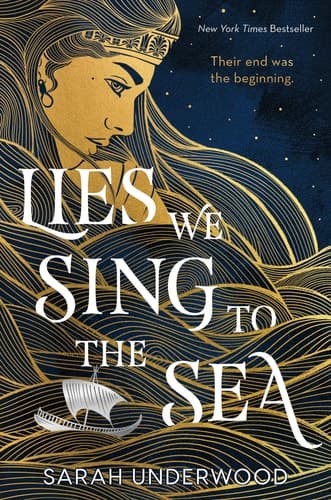
An instant New York Times bestseller--and a legendary YA debut!
This dazzling sapphic fantasy inspired by Greek mythology will captivate fans of Circe and The Song of Achilles.
Each spring, Ithaca condemns twelve maidens to the noose. This is the price vengeful Poseidon demands for the lives of Queen Penelope's twelve maids, hanged and cast into the depths centuries ago.
But when that fate comes for Leto, death is not what she thought it would be. Instead, she wakes on a mysterious island and meets a girl with green eyes and the power to command the sea. A girl named Melantho, who says one more death can stop a thousand.
The prince of Ithaca must die--or the tides of fate will drown them all.
Sarah Underwood weaves an epic tapestry of lies, love, and tragedy, perfect for fans of Madeline Miller, Alexandra Bracken, and Renée Ahdieh.
Frequently asked questions
Is Lies We Sing to the Sea appropriate for a 7-year-old?
The book discusses various forms of violence, including sexual violence, murder, and human sacrifice. It includes themes of toxic relationships and the consequences of violence on individuals and society. The narrative includes elements of fear and tension, particularly surrounding the themes of sacrifice and the fate of the characters involved. The stakes are high, with implications of death and tragedy.
Does Lies We Sing to the Sea have violence?
The book discusses various forms of violence, including sexual violence, murder, and human sacrifice. It includes themes of toxic relationships and the consequences of violence on individuals and society.
Does Lies We Sing to the Sea have scary content?
The narrative includes elements of fear and tension, particularly surrounding the themes of sacrifice and the fate of the characters involved. The stakes are high, with implications of death and tragedy.
Does Lies We Sing to the Sea have religious themes?
The narrative involves themes of sacrifice to the sea god Poseidon, reflecting ancient Greek religious practices. The story critiques the societal structures that enforce these sacrifices, suggesting a modern reinterpretation of faith and power dynamics.
Does Lies We Sing to the Sea have racial/cultural content?
While the book features a diverse cast, race is not a central theme or plot element in the narrative.
Does Lies We Sing to the Sea have profanity?
No profanity is mentioned in the search results related to the book's content.
Does Lies We Sing to the Sea have climate change?
No climate themes or environmental issues are mentioned in the search results related to the book's content.
Does Lies We Sing to the Sea have sexual identity?
The book contains discussions of sexual violence, including sexual assault against minors and other related themes. While these topics are addressed, they are not depicted graphically.
Does Lies We Sing to the Sea have gender roles?
The book critiques traditional gender roles by giving female characters agency and exploring their experiences in a male-dominated narrative. It presents a feminist perspective on women's roles in mythology.
Does Lies We Sing to the Sea have lgbtq+ themes?
The book features women of various sexual orientations, including lesbian and bisexual characters, and gives them agency within a narrative space traditionally dominated by male characters. It is framed as a feminist retelling that explores themes of queerness and women's roles in mythology.