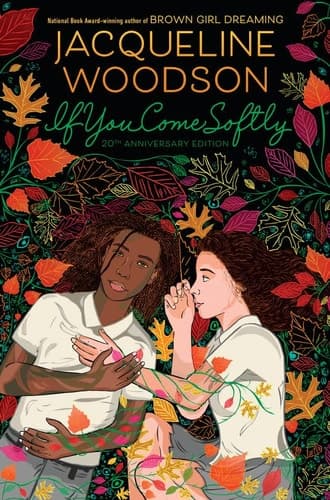
If You Come Softly 20th Anniversary Edition — Content Guide for Parents
Themes present
Not found
Content themes
Factual summary of themes present in this book. No opinion — just the facts.
Get the full theme breakdown in the app
Detailed evidence, confidence ratings, and source citations for every theme.
Download for iOSExample theme card
Religious themes
PRESENTContains references to prayer and church attendance. A minister character plays a supporting role in two chapters.
About this book
Jeremiah feels good inside his own skin. That is, when he's in his own Brooklyn neighborhood. But now he's going to be attending a fancy prep school in Manhattan, and black teenage boys don't exactly fit in there. So it's a surprise when he meets Ellie the first week of school. In one frozen moment their eyes lock, and after that they know they fit together--even though she's Jewish and he's black. Their worlds are so different, but to them that's not what matters. Too bad the rest of the world has to get in their way.
Jacqueline Woodson's work has been called "moving and resonant" (Wall Street Journal) and "gorgeous" (Vanity Fair). If You Come Softly is a powerful story of interracial love that leaves readers wondering "why" and "if only . . ."
Frequently asked questions
Is If You Come Softly 20th Anniversary Edition appropriate for a 7-year-old?
The narrative includes a wrenching climactic twist involving a senseless act of violence, specifically referencing the mistaken shooting of a character by police. This element is central to the plot's emotional impact. No scary content detected in the book's narrative based on the search results.
Does If You Come Softly 20th Anniversary Edition have violence?
The narrative includes a wrenching climactic twist involving a senseless act of violence, specifically referencing the mistaken shooting of a character by police. This element is central to the plot's emotional impact.
Does If You Come Softly 20th Anniversary Edition have scary content?
No scary content detected in the book's narrative based on the search results.
Does If You Come Softly 20th Anniversary Edition have religious themes?
No religious content detected in the book's narrative based on the search results.
Does If You Come Softly 20th Anniversary Edition have racial/cultural content?
The book addresses themes of racism and interracial love, highlighting the challenges faced by the characters due to their different racial backgrounds. It critiques societal perceptions of race and the impact of racism on relationships.
Does If You Come Softly 20th Anniversary Edition have profanity?
No profanity detected in the book's narrative based on the search results.
Does If You Come Softly 20th Anniversary Edition have climate change?
No climate themes detected in the book's narrative based on the search results.
Does If You Come Softly 20th Anniversary Edition have sexual identity?
There is no explicit sexual content in the book, and it is described as suitable for a teen audience, focusing on interracial situations rather than sexual themes.
Does If You Come Softly 20th Anniversary Edition have gender roles?
No specific gender roles or themes related to gender expectations are detected in the book's narrative based on the search results.
Does If You Come Softly 20th Anniversary Edition have lgbtq+ themes?
The story includes a character whose mother is gay and in love with a white woman, which the African American teenager must come to terms with. This aspect of the narrative normalizes LGBTQ+ identities within the context of family dynamics.