Harry Potter and the Philosopher's Stone (Irish) — Content Guide for Parents
Themes present
Not found
Content themes
Factual summary of themes present in this book. No opinion — just the facts.
Get the full theme breakdown in the app
Detailed evidence, confidence ratings, and source citations for every theme.
Download for iOSExample theme card
Religious themes
PRESENTContains references to prayer and church attendance. A minister character plays a supporting role in two chapters.
About this book
Bhí cónaí ar mhuintir Dursley in uimhir a ceathair Privet Drive ...'
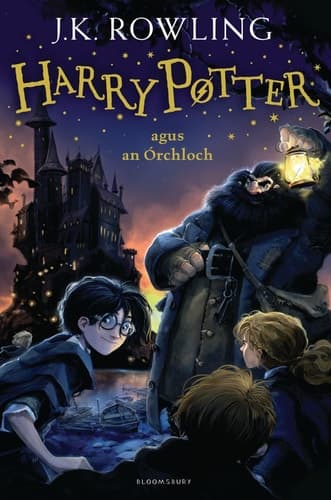
The first words of J.K. Rowling's timeless classic are familiar to readers the world over as 'Mr and Mrs Dursley, of number four, Privet Drive ...' Learners and lovers of the Irish language will delight in Máire Nic Mhaoláin's sparkling Irish language translation of Harry Potter and the Philosopher's Stone, which perfectly captures the wit and invention of the original, now reissued with stunning new cover art from Jonny Duddle.
Frequently asked questions
Is Harry Potter and the Philosopher's Stone (Irish) appropriate for a 7-year-old?
The narrative includes references to violence, such as the bloodless deaths of Harry's parents and a scene where Harry's uncle points a gun at Hagrid. Additionally, there are discussions of past murders related to the antagonist Voldemort. The book contains some intense and scary moments, including a three-headed dog, an attacking troll, and a hooded figure over a dead unicorn. It is noted that these elements may be frightening for sensitive readers.
Does Harry Potter and the Philosopher's Stone (Irish) have violence?
The narrative includes references to violence, such as the bloodless deaths of Harry's parents and a scene where Harry's uncle points a gun at Hagrid. Additionally, there are discussions of past murders related to the antagonist Voldemort.
Does Harry Potter and the Philosopher's Stone (Irish) have scary content?
The book contains some intense and scary moments, including a three-headed dog, an attacking troll, and a hooded figure over a dead unicorn. It is noted that these elements may be frightening for sensitive readers.
Does Harry Potter and the Philosopher's Stone (Irish) have religious themes?
The book does not contain explicit religious practices, beliefs, or ceremonies. It is noted that the story does not advocate negative views of religion.
Does Harry Potter and the Philosopher's Stone (Irish) have racial/cultural content?
The narrative introduces the concept of 'mud-bloods', which serves as a proxy for racism, and critiques the character Draco Malfoy for his views. This suggests an exploration of themes related to race and discrimination.
Does Harry Potter and the Philosopher's Stone (Irish) have profanity?
There is no mention of profanity or strong language in the narrative of the book.
Does Harry Potter and the Philosopher's Stone (Irish) have climate change?
There are no references to climate themes or environmental issues in the narrative of the book.
Does Harry Potter and the Philosopher's Stone (Irish) have sexual identity?
Sexual content is not present in the book. The narrative focuses on the adventures of young characters, and sex is described as barely entering the storyline.
Does Harry Potter and the Philosopher's Stone (Irish) have gender roles?
The narrative does not promote traditional gender roles or modern feminist themes. The characters are primarily focused on their magical adventures without a significant emphasis on gender dynamics.
Does Harry Potter and the Philosopher's Stone (Irish) have lgbtq+ themes?
No LGBTQ+ themes or characters are present in the narrative of 'Harry Potter and the Philosopher's Stone'. The search results primarily discuss external controversies related to the author rather than content from the book itself.