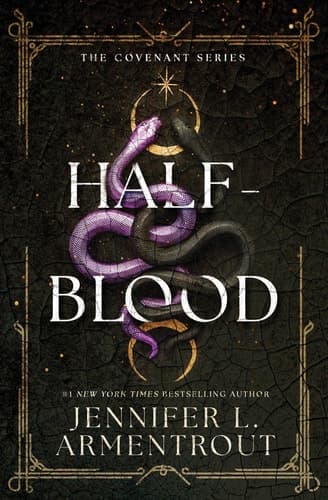
Half-Blood — Content Guide for Parents
Themes present
Not found
Content themes
Factual summary of themes present in this book. No opinion — just the facts.
Get the full theme breakdown in the app
Detailed evidence, confidence ratings, and source citations for every theme.
Download for iOSExample theme card
Religious themes
PRESENTContains references to prayer and church attendance. A minister character plays a supporting role in two chapters.
About this book
You will kill the ones you love. It is in your blood, in your fate.
Seventeen-year-old Alex and her mother have spent years on the run from the Covenant, a school where the pure descendants of gods hone their powers and half-mortal teens like Alex train to kill daimons for them. But when her mom is murdered by daimons and she has nobody else to turn to, Alex finds herself back at the Covenant, where she has two options: become a servant for the pures or work twice as hard as everyone else to catch up in her training.
The second option seems like an easy choice, but everything gets complicated when pure-blood Aiden volunteers to be her personal trainer. Because not only is Aiden gorgeous, but he also understands Alex in a way she's never experienced before. Unfortunately, relationships between pures and half-bloods are strictly forbidden.
But falling for Aiden isn't her biggest problem. As she learns the true reason her mother whisked her away from the Covenant and daimons close in on the school, she must fight to stay alive...even if it's her fault those around her are dropping dead.
Frequently asked questions
Is Half-Blood appropriate for a 7-year-old?
The book contains depictions of violence, including characters being tortured, drained of blood, and two mass killings where throats are slit. Additionally, daimons are attacked and killed using knives and other weapons. No genuinely frightening content is indicated in the search results. The focus is on action and fantasy elements rather than horror or terror.
Does Half-Blood have violence?
The book contains depictions of violence, including characters being tortured, drained of blood, and two mass killings where throats are slit. Additionally, daimons are attacked and killed using knives and other weapons.
Does Half-Blood have scary content?
No genuinely frightening content is indicated in the search results. The focus is on action and fantasy elements rather than horror or terror.
Does Half-Blood have religious themes?
No religious content in the book itself. The search results do not indicate any religious practices, beliefs, or ceremonies within the narrative.
Does Half-Blood have racial/cultural content?
There are no explicit racial themes or discussions in the book narrative based on the search results. The content focuses on fantasy elements rather than race as a central theme.
Does Half-Blood have profanity?
No profanity is explicitly mentioned in the search results as being present in the book. The focus is more on the themes and content rather than language.
Does Half-Blood have climate change?
No climate themes or discussions are present in the book. The content does not address environmental issues or activism.
Does Half-Blood have sexual identity?
The book includes scenes with kissing and nudity, as well as sexual content that is interrupted before it occurs. This suggests that while there are romantic and sexual themes, they are presented in a manner that is not explicit.
Does Half-Blood have gender roles?
The book features a strong female protagonist but does not actively discuss or critique gender roles. The narrative centers on fantasy and action rather than gender dynamics.
Does Half-Blood have lgbtq+ themes?
The book features a character who is gay, and it is discussed that being gay or bisexual is not a significant issue within the story's world. This framing suggests a level of normalization regarding LGBTQ+ identities.