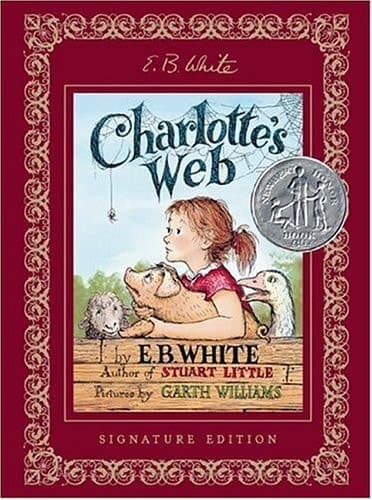
Charlotte's Web Signature Edition — Content Guide for Parents
Themes present
Not found
Content themes
Factual summary of themes present in this book. No opinion — just the facts.
Get the full theme breakdown in the app
Detailed evidence, confidence ratings, and source citations for every theme.
Download for iOSExample theme card
Religious themes
PRESENTContains references to prayer and church attendance. A minister character plays a supporting role in two chapters.
About this book
This is the story of a little girl named Fern who loved a little pig named Wilbur—and of Wilbur's dear friend Charlotte, a beautiful large grey spider who lived with Wilbur in the barn. With the help of Templeton, the rat who never did anything for anybody unless there was something in it for him, and with a wonderfully clever plan of her own, Charlotte saved the life of Wilbur, who by this time had grown up to be quite some pig.
How all of this comes about is Mr. White's story. It is a story of the magic of childhood on the farm. It is also a story of friendship, loyalty, and truth and shows readers that friends come in all shapes and sizes. The beloved story of Charlotte the spider, Wilbur the pig, and Fern, the little girl who understood their language, will continue to delight readers both young and old everywhere for generations to come.
Frequently asked questions
Is Charlotte's Web Signature Edition appropriate for a 7-year-old?
There is no explicit violence in the book. The narrative discusses themes of friendship and loyalty without depicting physical violence or harm between characters. The book does not contain genuinely frightening content. It is a gentle story that deals with themes of friendship and loss in a way that is appropriate for children.
Does Charlotte's Web Signature Edition have violence?
There is no explicit violence in the book. The narrative discusses themes of friendship and loyalty without depicting physical violence or harm between characters.
Does Charlotte's Web Signature Edition have scary content?
The book does not contain genuinely frightening content. It is a gentle story that deals with themes of friendship and loss in a way that is appropriate for children.
Does Charlotte's Web Signature Edition have religious themes?
The book touches on themes of faith and morality, which can be interpreted in a Christian context. However, E. B. White critiques traditional Christian morality, suggesting a more naturalistic understanding of values, which indicates a complex relationship with religious themes.
Does Charlotte's Web Signature Edition have racial/cultural content?
There are no explicit themes of race or racism in the narrative. The story focuses on animals and their interactions without addressing racial issues.
Does Charlotte's Web Signature Edition have profanity?
There is no profanity in the book. The language used is suitable for a children's audience.
Does Charlotte's Web Signature Edition have climate change?
The book does not address climate themes directly. While it features a farm setting, it does not engage in discussions about environmentalism or climate change.
Does Charlotte's Web Signature Edition have sexual identity?
No sexual content is present in the book. The narrative is focused on friendship and life lessons appropriate for children.
Does Charlotte's Web Signature Edition have gender roles?
The book features female characters like Charlotte and Fern who play significant roles in the story. However, it does not actively discuss or critique gender roles, focusing instead on their actions and relationships within the narrative.
Does Charlotte's Web Signature Edition have lgbtq+ themes?
No LGBTQ+ themes are present in the book itself. The mention of a 'queer look' on a character's face does not indicate a broader LGBTQ+ theme or character representation in the narrative.