A Series of Unfortunate Events #11: The Grim Grotto — Content Guide for Parents
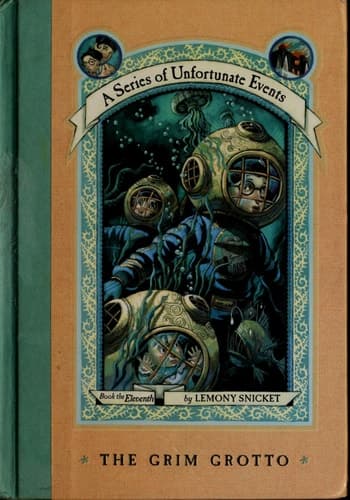
Themes present
Not found
Content themes
Factual summary of themes present in this book. No opinion — just the facts.
Get the full theme breakdown in the app
Detailed evidence, confidence ratings, and source citations for every theme.
Download for iOSExample theme card
Religious themes
PRESENTContains references to prayer and church attendance. A minister character plays a supporting role in two chapters.
About this book
Warning: Your day will become very dark - and possibly damp - if you read this book.
Plan to spend this spring in hiding. Lemony Snicket is back with the eleventh book in his New York Times bestselling A Series of Unfortunate Events.
Lemony Snicket's saga about the charming, intelligent and grossly unlucky Baudelaire orphans continues to provoke suspicion and despair in readers the world over. In the eleventh and most alarming volume yet in the bestselling phenomenon A Series of Unfortunate Events, the intrepid siblings delve further into the dark mystery surrounding the death of their parents and the baffling VFD organisation.
Ages 9+
Frequently asked questions
Is A Series of Unfortunate Events #11: The Grim Grotto appropriate for a 7-year-old?
The book does not contain explicit violence between characters. It features dark themes and situations that may be unsettling, but these do not equate to physical violence as defined by the criteria. The book contains elements that could be considered scary for younger readers, such as a repulsive villain and dark themes surrounding the orphans' misadventures. However, these are framed within a humorous context, making them less frightening.
Does A Series of Unfortunate Events #11: The Grim Grotto have violence?
The book does not contain explicit violence between characters. It features dark themes and situations that may be unsettling, but these do not equate to physical violence as defined by the criteria.
Does A Series of Unfortunate Events #11: The Grim Grotto have scary content?
The book contains elements that could be considered scary for younger readers, such as a repulsive villain and dark themes surrounding the orphans' misadventures. However, these are framed within a humorous context, making them less frightening.
Does A Series of Unfortunate Events #11: The Grim Grotto have religious themes?
No religious content is present in the book. While some reviews reference the book's themes and suggest alternative literature with religious undertones, these do not reflect the narrative of 'The Grim Grotto' itself.
Does A Series of Unfortunate Events #11: The Grim Grotto have racial/cultural content?
Race is not a central theme or plot point in the book. The narrative focuses on the Baudelaire orphans and their adventures without addressing racial issues explicitly.
Does A Series of Unfortunate Events #11: The Grim Grotto have profanity?
There is no profanity in the book. The language used is appropriate for the target age group, focusing on storytelling rather than inappropriate language.
Does A Series of Unfortunate Events #11: The Grim Grotto have climate change?
There are no explicit climate themes or environmental messages in the book. The story focuses on the misfortunes of the Baudelaire orphans rather than climate issues.
Does A Series of Unfortunate Events #11: The Grim Grotto have sexual identity?
No sexual content is present in the book. The narrative focuses on the adventures and misfortunes of the Baudelaire orphans without any sexual themes.
Does A Series of Unfortunate Events #11: The Grim Grotto have gender roles?
The book features intelligent and brave children of both genders but does not actively discuss or critique gender roles. The narrative does not promote traditional or modern gender roles.
Does A Series of Unfortunate Events #11: The Grim Grotto have lgbtq+ themes?
No LGBTQ+ themes are explicitly present in the book 'The Grim Grotto'. While there are mentions of LGBTQ+ characters in adaptations and discussions surrounding the series, these do not constitute content found within the book itself.