A History of Children's Books in 100 Books — Content Guide for Parents
Themes present
Not found
Content themes
Factual summary of themes present in this book. No opinion — just the facts.
Get the full theme breakdown in the app
Detailed evidence, confidence ratings, and source citations for every theme.
Download for iOSExample theme card
Religious themes
PRESENTContains references to prayer and church attendance. A minister character plays a supporting role in two chapters.
About this book
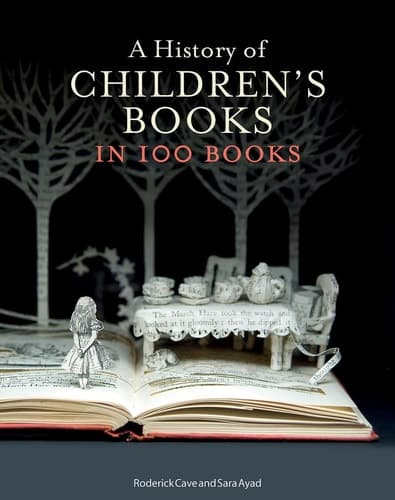
A History of Children's Books in 100 Books takes a global perspective and traces the development of the genre from ancient stories, such as Aesop's Fables and the Indian Panchatantra, through the Puritan primers of the 17th century to the Harry Potter series and books as technology.
Taking the approach of its precursor, The History of the Book in 100 Books, this book is about children's books as artifacts, as well as the texts they contain, and the industry and society that produced them. It covers aspects of selection, design, production and marketing of books for children. For the most part, illustrations are key components of children's stories, visualizing fantastic scenes and making them instantly recognizable, and such artwork is beautifully reproduced throughout.
The chapters, with topic examples, are:
1. Oral traditions and pre-literacy; baby's first book; folk tales; nursery rhymes; board books; Sumerian "lullaby" tablet; Dr. Seuss.
2. Fables around the world for the young; Panchatantra (India 200 AD).
3. ABC of Aristotle (Middle English); pop-ups, picture books, early learning; alphabet books.
4. Educational books, non-fiction; adult influence; behavior; The New England Primer.
5. Smaller books for small readers; child protagonists; miniature books; chapter books.
6. Animal Magic; Mother Goose; Charlotte's Web; Beatrix Potter; The Jungle Book; A. A. Milne.
7. Innocence, experience, genre books; imperialism; religion; Little Women; Black Beauty.
8. Fairies and Frighteners: Grimm Brothers; Japanese Fairy Tales; Edward Gorey; Maurice Sendak; Der Strewwelpeter.
9. New genres, adventure stories; pulp fiction; C. S. Lewis; Pippi Longstocking; H. G. Wells.
10. Wartime: Destruction of books; series; awards; Le Petit Prince; Nazi button book; Roald Dahl; Matilda.
11 Comics; new media; Manga; survival manuals; cartoons; advertising; political correctness; awards.
This is an authoritative introduction for general readers, for those interested in illustration arts, and for students of children's literature, its history, and the history of books. It is an essential selection for specialty and general collections.
Frequently asked questions
Is A History of Children's Books in 100 Books appropriate for a 7-year-old?
No violence is present in the book. The search results do not indicate any violent content within 'A History of Children's Books in 100 Books', focusing instead on its historical perspective. No scary content is present in the book. The search results do not suggest any frightening themes or elements within the narrative of 'A History of Children's Books in 100 Books'.
Does A History of Children's Books in 100 Books have violence?
No violence is present in the book. The search results do not indicate any violent content within 'A History of Children's Books in 100 Books', focusing instead on its historical perspective.
Does A History of Children's Books in 100 Books have scary content?
No scary content is present in the book. The search results do not suggest any frightening themes or elements within the narrative of 'A History of Children's Books in 100 Books'.
Does A History of Children's Books in 100 Books have religious themes?
No religious content is explicitly present in the book itself. While the search results mention religion in the context of children's literature, they do not indicate that specific religious practices or themes are discussed in this book.
Does A History of Children's Books in 100 Books have racial/cultural content?
Race is not a central theme in the book. The search results mention various discussions about racism in children's literature but do not indicate that 'A History of Children's Books in 100 Books' addresses race as a significant topic.
Does A History of Children's Books in 100 Books have profanity?
No profanity is mentioned in the book. The search results do not indicate any use of strong language or inappropriate content in 'A History of Children's Books in 100 Books'.
Does A History of Children's Books in 100 Books have climate change?
No climate themes are present in the book. The search results reference environmental topics in children's literature but do not indicate that 'A History of Children's Books in 100 Books' includes discussions on climate issues.
Does A History of Children's Books in 100 Books have sexual identity?
No sexual content is present in the book. The search results reference discussions about sexual education in children's literature but do not cite any specific sexual themes in this book.
Does A History of Children's Books in 100 Books have gender roles?
The book does not actively discuss or critique gender roles. The search results mention gender roles in the context of children's literature but do not provide evidence of such themes in this specific book.
Does A History of Children's Books in 100 Books have lgbtq+ themes?
No LGBTQ+ themes or characters are explicitly mentioned in the book's narrative. The search results focus on broader discussions about LGBTQ+ literature but do not provide specific content from 'A History of Children's Books in 100 Books'.
Related books
More related books will appear here when available.