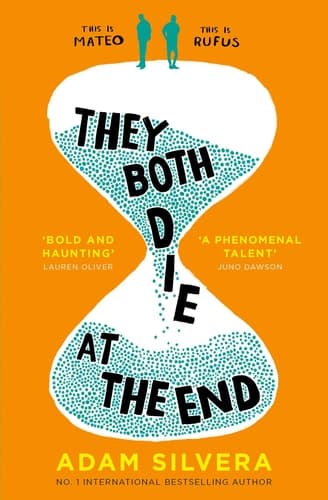
They Both Die at the End — Content Guide for Parents
Themes present
Not found
Content themes
Factual summary of themes present in this book. No opinion — just the facts.
Get the full theme breakdown in the app
Detailed evidence, confidence ratings, and source citations for every theme.
Download for iOSExample theme card
Religious themes
PRESENTContains references to prayer and church attendance. A minister character plays a supporting role in two chapters.
About this book
On September 5th, a little after midnight, Death-Cast calls Mateo Torrez and Rufus Emeterio to give them some bad news: they're going to die today. Mateo and Rufus are total strangers, but, for different reasons, they're both looking to make a new friend on their End Day. The good news: there's an app for that. It's called the Last Friend, and through it, Rufus and Mateo are about to meet up for one last great adventure - to live a lifetime in a single day.
Another beautiful, heartbreaking and life-affirming book from the brilliant Adam Silvera, author of More Happy Than Not, History Is All You Left Me, What If It's Us, Here's To Us and the Infinity Cycle series.
PRAISE FOR ADAM SILVERA:
'There isn't a teenager alive who won't find their heart described perfectly on these pages.' Patrick Ness, author of The Knife of Never Letting Go
'Adam Silvera is a master at capturing the infinite small heartbreaks of love and loss and grief.' Nicola Yoon, author of Everything, Everything
'A phenomenal talent.' Juno Dawson, author of Clean and Wonderland
'Bold and haunting.' Lauren Oliver, author of Delirium
Frequently asked questions
Is They Both Die at the End appropriate for a 7-year-old?
The story includes various forms of violence, such as characters experiencing physical harm and discussions of death due to a violent organization. The presence of a suicide bombing and other violent scenarios is noted. The book includes disturbing elements such as violence and the concept of death looming over the characters, which may be unsettling for some readers. It is suggested to be age-appropriate for mature eighth graders and up.
Does They Both Die at the End have violence?
The story includes various forms of violence, such as characters experiencing physical harm and discussions of death due to a violent organization. The presence of a suicide bombing and other violent scenarios is noted.
Does They Both Die at the End have scary content?
The book includes disturbing elements such as violence and the concept of death looming over the characters, which may be unsettling for some readers. It is suggested to be age-appropriate for mature eighth graders and up.
Does They Both Die at the End have religious themes?
The characters discuss serious topics including religion and faith, indicating that these themes are woven into the narrative. This includes reflections on mortality and the meaning of life, which may involve religious considerations.
Does They Both Die at the End have racial/cultural content?
The protagonists are identified as Latino, specifically Puerto Rican and Cuban-American, which is central to their identities and experiences in the narrative. The book addresses themes related to their cultural backgrounds.
Does They Both Die at the End have profanity?
The book contains regular use of strong language, including words such as 'f--k' and 's--t'. This language is noted as part of the intense circumstances surrounding the characters.
Does They Both Die at the End have climate change?
No climate-related themes or discussions are present in the narrative.
Does They Both Die at the End have sexual identity?
The narrative includes frank discussions about queerness, sex, and romantic relationships, featuring kissing and make-out scenes. The characters reflect on their sexual identities and past encounters.
Does They Both Die at the End have gender roles?
No specific themes related to traditional gender roles or modern feminism are detected in the narrative.
Does They Both Die at the End have lgbtq+ themes?
The main characters, Mateo and Rufus, are identified as queer, with Mateo being Puerto Rican and Rufus being Cuban-American and bisexual. The narrative explores their relationship and experiences as LGBTQ+ teens in New York City, normalizing their identities within the story.