The Wide Window (A Series of Unfortunate Events, Book 3) — Content Guide for Parents
Themes present
Not found
Content themes
Factual summary of themes present in this book. No opinion — just the facts.
Get the full theme breakdown in the app
Detailed evidence, confidence ratings, and source citations for every theme.
Download for iOSExample theme card
Religious themes
PRESENTContains references to prayer and church attendance. A minister character plays a supporting role in two chapters.
About this book
Dear Reader,
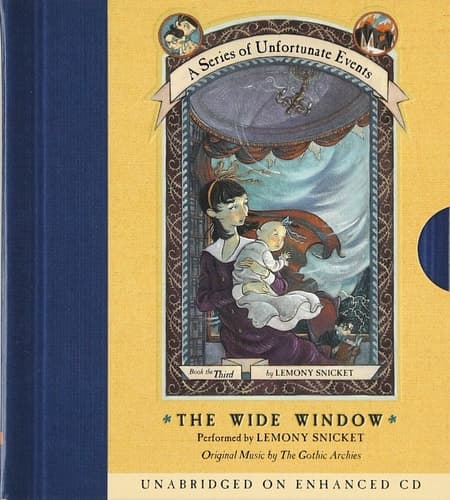
If you have not read anything about the Baudelaire orphans, then before you read even one more sentence, you should know this: Violet, Klaus, and Sunny are kindhearted and quick-witted, but their lives, I am sorry to say, are filled with bad luck and misery. All of the stories about these three children are unhappy and wretched, and this one may be the worst of them all. If you haven't got the stomach for a story that includes a hurricane, a signalling device, hungry leeches, cold cucumber soup, a horrible villain, and a doll named Pretty Penny, then this book will probably fill you with despair. I will continue to record these tragic tales, for that is what I do. You, however, should decide for yourself whether you can possibly endure this miserable story.
With all due respect,
Lemony Snicket
Frequently asked questions
Is The Wide Window (A Series of Unfortunate Events, Book 3) appropriate for a 7-year-old?
The book contains elements of child abuse and neglect, as the Baudelaire orphans are placed in the care of an ill-qualified guardian who is more concerned with her fears than their safety. This context suggests a level of violence against the children's well-being. The book includes elements that could be considered scary for younger readers, such as the presence of a villain and the overall dark themes of the series, including danger and misfortune faced by the children.
Does The Wide Window (A Series of Unfortunate Events, Book 3) have violence?
The book contains elements of child abuse and neglect, as the Baudelaire orphans are placed in the care of an ill-qualified guardian who is more concerned with her fears than their safety. This context suggests a level of violence against the children's well-being.
Does The Wide Window (A Series of Unfortunate Events, Book 3) have scary content?
The book includes elements that could be considered scary for younger readers, such as the presence of a villain and the overall dark themes of the series, including danger and misfortune faced by the children.
Does The Wide Window (A Series of Unfortunate Events, Book 3) have religious themes?
No religious content in the book itself. The search results mention a review that describes the author's preachy style but do not indicate any specific religious practices or themes in the narrative.
Does The Wide Window (A Series of Unfortunate Events, Book 3) have racial/cultural content?
No explicit racial themes or discussions in the book. The narrative focuses on the experiences of the Baudelaire orphans without addressing race as a central theme.
Does The Wide Window (A Series of Unfortunate Events, Book 3) have profanity?
No profanity detected in the book. The language used is appropriate for children, focusing on the story's themes rather than inappropriate language.
Does The Wide Window (A Series of Unfortunate Events, Book 3) have climate change?
No climate themes detected in the book. The story does not address environmental issues or activism as part of its narrative.
Does The Wide Window (A Series of Unfortunate Events, Book 3) have sexual identity?
No sexual content in the book. The narrative focuses on the misadventures of the Baudelaire orphans without any explicit sexual themes.
Does The Wide Window (A Series of Unfortunate Events, Book 3) have gender roles?
The book does not actively discuss or critique gender roles. While there are female characters, the narrative does not focus on gender dynamics or expectations.
Does The Wide Window (A Series of Unfortunate Events, Book 3) have lgbtq+ themes?
The book features a gay/Achillean secondary character, indicating some level of LGBTQ+ representation. However, the narrative does not explicitly focus on these themes, and the representation may not be central to the plot.