The Sign on Rosie's Door — Content Guide for Parents
Themes present
Not found
Content themes
Factual summary of themes present in this book. No opinion — just the facts.
Get the full theme breakdown in the app
Detailed evidence, confidence ratings, and source citations for every theme.
Download for iOSExample theme card
Religious themes
PRESENTContains references to prayer and church attendance. A minister character plays a supporting role in two chapters.
About this book
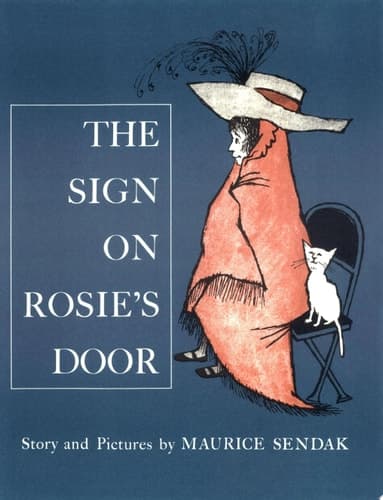
There was a sign on Rosie's door that said, "If you want to know a secret, knock three times." Kathy, Rosie's good friend, knocked three times and learned the secret-that Rosie was no longer Rosie, but Alinda, the lovely lady singer.
Adventures with Alinda were fun for Kathy and Sal and Pudgy and Dolly. Even Lenny, who occasionally didn't believe in Alinda, was delighted by the Fourth of July celebration that Alinda, with the help of the Magic Man, held. At the end of the celebration, Alinda was gone forever, and Rosie had returned, but she soon found something else nice to be.
Maurice Sendak, the well-known artist and author-illustrator of Kenny's Window and Very Far Away, has written a story of real children, playing as only children know how. Young readers will wish that Alinda lived next door to them.
Frequently asked questions
Is The Sign on Rosie's Door appropriate for a 7-year-old?
The book does not contain any violence. It centers around Rosie and her imaginative transformations, which are playful and whimsical, suitable for young children. The book does not contain any scary content. It presents a light-hearted narrative about a child's imaginative adventures, which are not intended to frighten.
Does The Sign on Rosie's Door have violence?
The book does not contain any violence. It centers around Rosie and her imaginative transformations, which are playful and whimsical, suitable for young children.
Does The Sign on Rosie's Door have scary content?
The book does not contain any scary content. It presents a light-hearted narrative about a child's imaginative adventures, which are not intended to frighten.
Does The Sign on Rosie's Door have religious themes?
No religious content in the book itself. The narrative focuses on a child's imaginative play and transformation, without reference to any religious practices or beliefs.
Does The Sign on Rosie's Door have racial/cultural content?
Race is not a central theme in the book. The narrative focuses on the character Rosie and her imaginative play without addressing racial issues or dynamics.
Does The Sign on Rosie's Door have profanity?
There is no profanity in the book. The language used is appropriate for children, focusing on imaginative scenarios and playful interactions.
Does The Sign on Rosie's Door have climate change?
There are no climate themes present in the book. The story is centered around imaginative play and does not address environmental issues.
Does The Sign on Rosie's Door have sexual identity?
No sexual content is present in the book. The story is aimed at children and focuses on imaginative play rather than any themes of sexuality.
Does The Sign on Rosie's Door have gender roles?
The book does not actively discuss or critique gender roles. Rosie engages in imaginative play, transforming into various characters, but this does not promote or challenge traditional gender roles.
Does The Sign on Rosie's Door have lgbtq+ themes?
No LGBTQ+ themes are explicitly present in the book 'The Sign on Rosie's Door'. While Maurice Sendak's personal life included his coming out as gay, this aspect does not translate into the narrative of the book itself.
Related books
More related books will appear here when available.