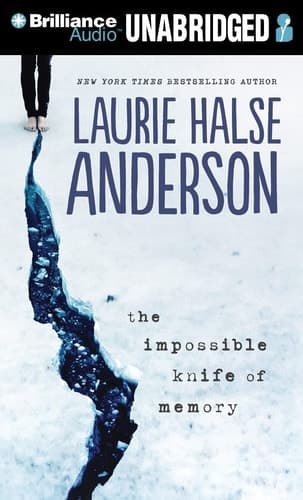
The Impossible Knife of Memory — Content Guide for Parents
Themes present
Not found
Content themes
Factual summary of themes present in this book. No opinion — just the facts.
Get the full theme breakdown in the app
Detailed evidence, confidence ratings, and source citations for every theme.
Download for iOSExample theme card
Religious themes
PRESENTContains references to prayer and church attendance. A minister character plays a supporting role in two chapters.
About this book
Frequently asked questions
Is The Impossible Knife of Memory appropriate for a 7-year-old?
The book includes depictions of violence, such as the father character being violent at home, punching walls, and attempting suicide. These elements are significant to the storyline, particularly regarding the father's PTSD. The book deals with intense themes such as PTSD and the fear associated with the father's declining mental health, which may be considered scary for some readers, particularly younger audiences.
Does The Impossible Knife of Memory have violence?
The book includes depictions of violence, such as the father character being violent at home, punching walls, and attempting suicide. These elements are significant to the storyline, particularly regarding the father's PTSD.
Does The Impossible Knife of Memory have scary content?
The book deals with intense themes such as PTSD and the fear associated with the father's declining mental health, which may be considered scary for some readers, particularly younger audiences.
Does The Impossible Knife of Memory have religious themes?
No religious content, practices, or beliefs are present in the narrative of the book as indicated by the search results.
Does The Impossible Knife of Memory have racial/cultural content?
The search results do not indicate any explicit themes of race or racism as central to the plot or character development in the book.
Does The Impossible Knife of Memory have profanity?
The book contains some swearing and references to teen drug experimentation, which are noted in the context of the father's struggles and the teen characters' experiences.
Does The Impossible Knife of Memory have climate change?
No climate-related themes or discussions are present in the narrative of the book as indicated by the search results.
Does The Impossible Knife of Memory have sexual identity?
The narrative includes themes of sexual exploration and relationships, with references to a near sexual encounter between the main character and her boyfriend. The book also addresses serious subjects like sexual assault in the context of the author's broader work.
Does The Impossible Knife of Memory have gender roles?
The book features a female protagonist dealing with complex family dynamics, including her father's PTSD. It touches on themes of gender roles in the context of family responsibilities and emotional labor, but does not explicitly promote or critique traditional gender roles.
Does The Impossible Knife of Memory have lgbtq+ themes?
No explicit LGBTQ+ themes or characters are mentioned in the search results. The references to LGBTQ+ Pride and diverse representation appear to be in context of broader discussions and not central to the book's narrative.