The Burning Maze (Trials of Apollo, The Book Three) — Content Guide for Parents
Themes present
Not found
Content themes
Factual summary of themes present in this book. No opinion — just the facts.
Get the full theme breakdown in the app
Detailed evidence, confidence ratings, and source citations for every theme.
Download for iOSExample theme card
Religious themes
PRESENTContains references to prayer and church attendance. A minister character plays a supporting role in two chapters.
About this book
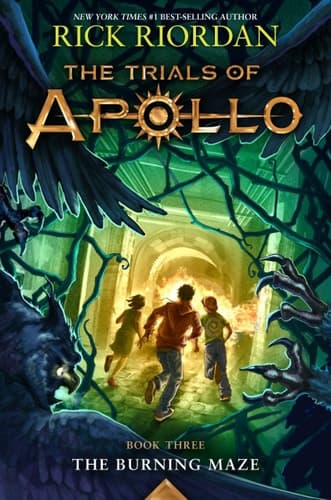
With the help of some demigod friends, Lester managed to survive his first two trials, one at Camp Half-Blood, and one in Indianapolis, where Meg received the Dark Prophecy. The words she uttered while seated on the Throne of Memory revealed that an evil triumvirate of Roman emperors plans to attack Camp Jupiter. While Leo flies ahead on Festus to warn the Roman camp, Lester and Meg must go through the Labyrinth to find the third emperor--and an Oracle who speaks in word puzzles--somewhere in the American Southwest. There is one glimmer of hope in the gloom-filled prophecy: The cloven guide alone the way does know. They will have a satyr companion, and Meg knows just who to call upon. . . .
Frequently asked questions
Is The Burning Maze (Trials of Apollo, The Book Three) appropriate for a 7-year-old?
The book contains significant violence, including orders for hearts and tongues to be cut out and two sad deaths of key characters, which are mourned by others. Additionally, there are threats of disembowelment from creatures in the story. The narrative includes frightening elements, such as the threat of being disemboweled by monsters and the presence of a character named Caligula, who is portrayed as evil. These elements contribute to a tense atmosphere.
Does The Burning Maze (Trials of Apollo, The Book Three) have violence?
The book contains significant violence, including orders for hearts and tongues to be cut out and two sad deaths of key characters, which are mourned by others. Additionally, there are threats of disembowelment from creatures in the story.
Does The Burning Maze (Trials of Apollo, The Book Three) have scary content?
The narrative includes frightening elements, such as the threat of being disemboweled by monsters and the presence of a character named Caligula, who is portrayed as evil. These elements contribute to a tense atmosphere.
Does The Burning Maze (Trials of Apollo, The Book Three) have religious themes?
The story incorporates elements of Greek and Roman mythology, with characters such as Apollo, Meg (daughter of Demeter), and Grover (a satyr). The plot revolves around mythological themes and characters, reflecting a blend of ancient mythology with modern storytelling.
Does The Burning Maze (Trials of Apollo, The Book Three) have racial/cultural content?
While the book features diverse characters, race is not a central theme or plot element. The focus remains on mythological adventures rather than racial dynamics or issues.
Does The Burning Maze (Trials of Apollo, The Book Three) have profanity?
The characters occasionally use mild profanities, such as 'darn,' and replace stronger profanities with references to Greek gods and places. Name-calling is also present, including terms like 'loser' and 'idiot.'
Does The Burning Maze (Trials of Apollo, The Book Three) have climate change?
The story addresses themes of environmental destruction and climate change, particularly through the experiences of dryads and the dangers posed by human carelessness and fire. These elements highlight the impact of climate issues within the narrative.
Does The Burning Maze (Trials of Apollo, The Book Three) have sexual identity?
Apollo's bisexuality is openly discussed in the narrative, and relationships with members of both sexes are addressed in a nonjudgmental manner. The portrayal of sexuality is casual and integrated into the character's development.
Does The Burning Maze (Trials of Apollo, The Book Three) have gender roles?
The book does not actively discuss or critique gender roles. It features a mix of characters, including strong female characters, but does not engage with themes of traditional or modern gender roles.
Does The Burning Maze (Trials of Apollo, The Book Three) have lgbtq+ themes?
The book features characters who identify as transgender and nonbinary, and Apollo's bisexuality is acknowledged as part of his character development. The narrative treats these identities with acceptance and normalizes them within the story.