Slay — Content Guide for Parents
Themes present
Not found
Content themes
Factual summary of themes present in this book. No opinion — just the facts.
Get the full theme breakdown in the app
Detailed evidence, confidence ratings, and source citations for every theme.
Download for iOSExample theme card
Religious themes
PRESENTContains references to prayer and church attendance. A minister character plays a supporting role in two chapters.
About this book
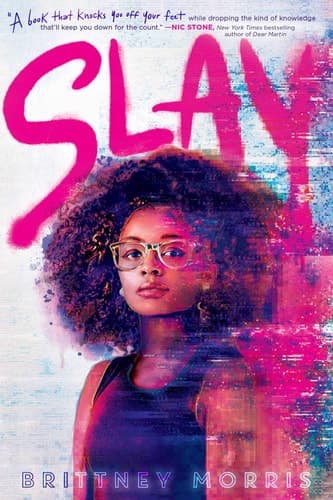
"A book that knocks you off your feet while dropping the kind of knowledge that'll keep you down for the count. Prepare to BE slain." --Nic Stone, New York Times bestselling author of Dear Martin and Odd One Out
Ready Player One meets The Hate U Give in this dynamite debut novel that follows a fierce teen game developer as she battles a real-life troll intent on ruining the Black Panther-inspired video game she created and the safe community it represents for Black gamers.
By day, seventeen-year-old Kiera Johnson is an honors student, a math tutor, and one of the only Black kids at Jefferson Academy. But at home, she joins hundreds of thousands of Black gamers who duel worldwide as Nubian personas in the secret multiplayer online role-playing card game, SLAY. No one knows Kiera is the game developer, not her friends, her family, not even her boyfriend, Malcolm, who believes video games are partially responsible for the "downfall of the Black man."
But when a teen in Kansas City is murdered over a dispute in the SLAY world, news of the game reaches mainstream media, and SLAY is labeled a racist, exclusionist, violent hub for thugs and criminals. Even worse, an anonymous troll infiltrates the game, threatening to sue Kiera for "anti-white discrimination."
Driven to save the only world in which she can be herself, Kiera must preserve her secret identity and harness what it means to be unapologetically Black in a world intimidated by Blackness. But can she protect her game without losing herself in the process?
Frequently asked questions
Is Slay appropriate for a 7-year-old?
The story includes a murder that occurs as a result of a dispute in the game, leading to media scrutiny and accusations of racism. This depiction of violence is central to the plot and its consequences. No content classified as scary or frightening is detected in the book's narrative.
Does Slay have violence?
The story includes a murder that occurs as a result of a dispute in the game, leading to media scrutiny and accusations of racism. This depiction of violence is central to the plot and its consequences.
Does Slay have scary content?
No content classified as scary or frightening is detected in the book's narrative.
Does Slay have religious themes?
No religious content or themes detected in the book's narrative.
Does Slay have racial/cultural content?
The book addresses themes of racism and identity, particularly within the Black community. It explores the impact of racial violence and the protagonist's experiences as a Black gamer.
Does Slay have profanity?
The book contains infrequent swearing, including words like 'damn', 'hell', and 'f--k'. This language is not pervasive but is present in certain contexts.
Does Slay have climate change?
No climate-related themes or content are present in the book's narrative.
Does Slay have sexual identity?
The main character is depicted as sexually active with her boyfriend, discussing their relationship and intimacy. While there are no detailed sex scenes, the topic is addressed openly.
Does Slay have gender roles?
No specific themes related to traditional gender roles or modern feminism are detected in the book's narrative.
Does Slay have lgbtq+ themes?
The book features a Black queer protagonist, Kiera, who navigates her identity and relationships, including her bisexuality. The narrative normalizes LGBTQ+ experiences and highlights the intersection of race and sexual identity.