People Kill People — Content Guide for Parents
Themes present
Not found
Content themes
Factual summary of themes present in this book. No opinion — just the facts.
Get the full theme breakdown in the app
Detailed evidence, confidence ratings, and source citations for every theme.
Download for iOSExample theme card
Religious themes
PRESENTContains references to prayer and church attendance. A minister character plays a supporting role in two chapters.
About this book
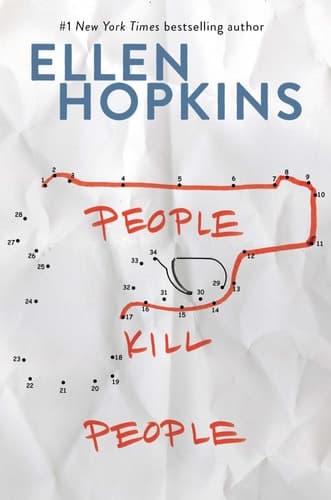
A New York Times bestseller.
Someone will shoot. And someone will die.
A compelling and complex novel about gun violence and white supremacy from #1 New York Times bestselling author Ellen Hopkins.
People kill people. Guns just make it easier.
A gun is sold in the classifieds after killing a spouse, bought by a teenager for needed protection. But which was it? Each has the incentive to pick up a gun, to fire it. Was it Rand or Cami, married teenagers with a young son? Was it Silas or Ashlyn, members of a white supremacist youth organization? Daniel, who fears retaliation because of his race, who possessively clings to Grace, the love of his life? Or Noelle, who lost everything after a devastating accident, and has sunk quietly into depression?
One tense week brings all six people into close contact in a town wrought with political and personal tensions. Someone will fire. And someone will die. But who?
Frequently asked questions
Is People Kill People appropriate for a 7-year-old?
The book addresses gun violence and includes graphic depictions of violence, such as a boy's rape and a woman's stabbing death. It explores themes of jealousy and revenge among the characters, contributing to a violent atmosphere. The book's dark and tragic storyline, which includes themes of violence and the psychological impact of gun culture, may be considered scary for younger readers. It explores the unsettling realities of the characters' lives.
Does People Kill People have violence?
The book addresses gun violence and includes graphic depictions of violence, such as a boy's rape and a woman's stabbing death. It explores themes of jealousy and revenge among the characters, contributing to a violent atmosphere.
Does People Kill People have scary content?
The book's dark and tragic storyline, which includes themes of violence and the psychological impact of gun culture, may be considered scary for younger readers. It explores the unsettling realities of the characters' lives.
Does People Kill People have religious themes?
No religious themes or content detected in search results.
Does People Kill People have racial/cultural content?
The book tackles issues of racism and white nationalism, exploring the characters' feelings about immigration and racial superiority. This framing indicates a critique of these societal issues.
Does People Kill People have profanity?
The book contains profanity and racist remarks throughout the narrative, reflecting the troubled backgrounds of the characters and their environments.
Does People Kill People have climate change?
No climate themes or content detected in search results.
Does People Kill People have sexual identity?
The narrative includes detailed descriptions of sexual content, including teens engaging in sex and oral sex, as well as a character trading sex for money. This content is presented in a context that reflects the characters' struggles and relationships.
Does People Kill People have gender roles?
No explicit themes regarding gender roles detected in search results.
Does People Kill People have lgbtq+ themes?
The character Noelle is identified as gay, and her relationship with her best friend Grace is a significant aspect of the narrative. The presence of several queer characters is noted, indicating a representation of LGBTQ+ themes.