Oh, the Thinks You Can Think — Content Guide for Parents
Themes present
Not found
Content themes
Factual summary of themes present in this book. No opinion — just the facts.
Get the full theme breakdown in the app
Detailed evidence, confidence ratings, and source citations for every theme.
Download for iOSExample theme card
Religious themes
PRESENTContains references to prayer and church attendance. A minister character plays a supporting role in two chapters.
About this book
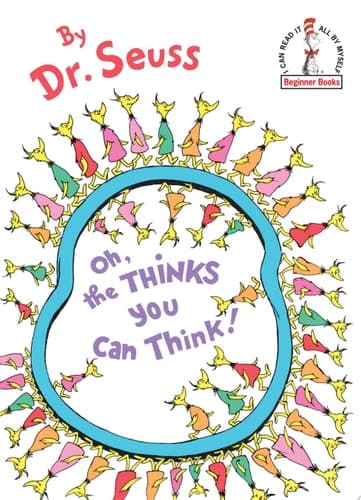
Young readers will delight in this Oh, the Thinks You Can Think! which celebrates the imagination and encourages young readers to think . . . about thinking! “Think left and think right and think low and think high. Oh, the Thinks you can think up if only you try.”
Beginner Books are fun, funny, and easy to read! Launched by Dr. Seuss in 1957 with the publication of The Cat in the Hat, this beloved early reader series motivates children to read on their own by using simple words with illustrations that give clues to their meaning. Featuring a combination of kid appeal, supportive vocabulary, and bright, cheerful art, Beginner Books will encourage a love of reading.
Frequently asked questions
Is Oh, the Thinks You Can Think appropriate for a 7-year-old?
No violence detected in the book. The narrative focuses on imaginative thinking and whimsical creatures, with no instances of physical conflict or harm. No genuinely frightening content in the book. While the illustrations may be imaginative and colorful, they do not depict any scary themes or situations that would cause fear.
Does Oh, the Thinks You Can Think have violence?
No violence detected in the book. The narrative focuses on imaginative thinking and whimsical creatures, with no instances of physical conflict or harm.
Does Oh, the Thinks You Can Think have scary content?
No genuinely frightening content in the book. While the illustrations may be imaginative and colorful, they do not depict any scary themes or situations that would cause fear.
Does Oh, the Thinks You Can Think have religious themes?
No religious content in the book itself. The search results mention Dr. Seuss's background and opinions but do not provide evidence of religious practices or beliefs within the narrative of 'Oh, the Thinks You Can Think!'.
Does Oh, the Thinks You Can Think have racial/cultural content?
No explicit racial themes in the book. The search results do not indicate any discussion of race as a central theme in 'Oh, the Thinks You Can Think!'.
Does Oh, the Thinks You Can Think have profanity?
No profanity found in the book. The narrative is suitable for children and does not include any inappropriate language.
Does Oh, the Thinks You Can Think have climate change?
No climate themes present in the book. The search results reference other Dr. Seuss works that address environmental issues but do not indicate that 'Oh, the Thinks You Can Think!' contains any related content.
Does Oh, the Thinks You Can Think have sexual identity?
No sexual content in the book. The search results reference other works discussing sexual themes but do not indicate any sexual content in 'Oh, the Thinks You Can Think!'.
Does Oh, the Thinks You Can Think have gender roles?
The book does not actively discuss or critique gender roles. While it features various imaginative characters, it does not promote or challenge traditional gender expectations.
Does Oh, the Thinks You Can Think have lgbtq+ themes?
No LGBTQ+ themes present in the book 'Oh, the Thinks You Can Think!'. The search results primarily discuss LGBTQ+ themes in other contexts and do not reference any relevant content from this specific book.
Related books
More related books will appear here when available.