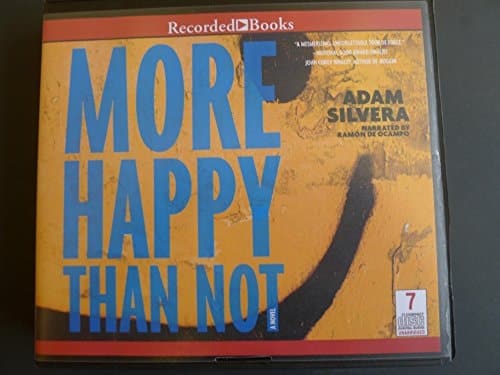
More Happy Than Not — Content Guide for Parents
Themes present
Not found
Content themes
Factual summary of themes present in this book. No opinion — just the facts.
Get the full theme breakdown in the app
Detailed evidence, confidence ratings, and source citations for every theme.
Download for iOSExample theme card
Religious themes
PRESENTContains references to prayer and church attendance. A minister character plays a supporting role in two chapters.
About this book
Frequently asked questions
Is More Happy Than Not appropriate for a 7-year-old?
The book includes a scene where Aaron is beaten up after being seen hugging another boy, highlighting the violence faced by LGBTQ+ individuals. This act of violence is significant to the plot and Aaron's character development. No elements of horror or frightening content are mentioned in the search results.
Does More Happy Than Not have violence?
The book includes a scene where Aaron is beaten up after being seen hugging another boy, highlighting the violence faced by LGBTQ+ individuals. This act of violence is significant to the plot and Aaron's character development.
Does More Happy Than Not have scary content?
No elements of horror or frightening content are mentioned in the search results.
Does More Happy Than Not have religious themes?
No religious practices, beliefs, or ceremonies are mentioned in the narrative of the book.
Does More Happy Than Not have racial/cultural content?
The protagonist, Aaron Soto, is described as a Nuyorican living in the Bronx, and the narrative addresses themes of race, class, and sexuality. The book reflects on the cultural and societal pressures faced by a young Hispanic boy in a diverse urban setting.
Does More Happy Than Not have profanity?
The dialogue includes strong language such as 'f--k' and 's--t', reflecting the realistic speech patterns of the characters. This use of profanity is consistent with the urban setting and the characters' backgrounds.
Does More Happy Than Not have climate change?
No themes related to climate, environmentalism, or activism are present in the narrative.
Does More Happy Than Not have sexual identity?
The narrative contains references to sexual activity, including discussions of first times and illicit hookups, both straight and gay. This is framed within the context of teenage sexual awakening and identity exploration.
Does More Happy Than Not have gender roles?
While the book features diverse characters, there is no explicit discussion of traditional or modern gender roles as a central theme in the narrative.
Does More Happy Than Not have lgbtq+ themes?
The story follows Aaron Soto, a 16-year-old boy grappling with his sexual identity, questioning whether he is straight, bisexual, or gay. The narrative explores themes of self-acceptance and the societal pressures surrounding sexuality, particularly through the lens of Aaron's desire to suppress his identity.