Messenger — Content Guide for Parents
Themes present
Not found
Content themes
Factual summary of themes present in this book. No opinion — just the facts.
Get the full theme breakdown in the app
Detailed evidence, confidence ratings, and source citations for every theme.
Download for iOSExample theme card
Religious themes
PRESENTContains references to prayer and church attendance. A minister character plays a supporting role in two chapters.
About this book
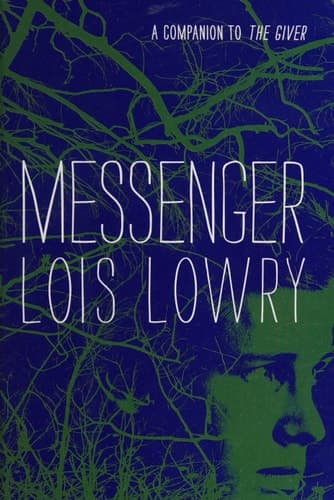
Messenger is the masterful third novel in the Giver Quartet, which began with the dystopian bestseller The Giver, now a major motion picture.
Matty has lived in Village and flourished under the guidance of Seer, a blind man known for his special sight. Village once welcomed newcomers, but something sinister has seeped into Village and the people have voted to close it to outsiders. Matty has been invaluable as a messenger. Now he must risk everything to make one last journey through the treacherous forest with his only weapon, a power he unexpectedly discovers within himself.
From the Trade Paperback edition.
Frequently asked questions
Is Messenger appropriate for a 7-year-old?
The book includes scenes of violence, such as when Forest attacks Matty by dripping poisonous sap onto his arms, causing pain and swelling. This represents a clear instance of physical violence within the narrative. The book contains elements that may be considered scary, particularly the descriptions of the sinister changes in the Village and the foreboding atmosphere created by the encroaching Forest. These elements could evoke fear or discomfort in some readers.
Does Messenger have violence?
The book includes scenes of violence, such as when Forest attacks Matty by dripping poisonous sap onto his arms, causing pain and swelling. This represents a clear instance of physical violence within the narrative.
Does Messenger have scary content?
The book contains elements that may be considered scary, particularly the descriptions of the sinister changes in the Village and the foreboding atmosphere created by the encroaching Forest. These elements could evoke fear or discomfort in some readers.
Does Messenger have religious themes?
The book contains themes that some readers interpret as having religious undertones, particularly in the context of community and acceptance. Lois Lowry has acknowledged that while she did not consciously write a 'Christian allegory', some theological symbolism can be found in the story. This suggests an implicit connection to Christian themes.
Does Messenger have racial/cultural content?
The search results do not indicate any explicit themes of race or racism in the book 'Messenger'. There are no references to racial issues or dynamics as central to the plot.
Does Messenger have profanity?
No profanity is reported in the book. The search results do not indicate the presence of any strong language or inappropriate content.
Does Messenger have climate change?
The narrative hints at themes related to environmental change and community sustainability, particularly through the depiction of the Village facing existential threats due to resource limitations. This suggests an implicit commentary on climate-related issues.
Does Messenger have sexual identity?
There is no mention of sexual content in the book 'Messenger'. The search results do not indicate any references to sexual themes or content within the narrative.
Does Messenger have gender roles?
The book does not actively discuss or critique gender roles. While it features both male and female characters, there is no thematic exploration of gender expectations or roles within the narrative.
Does Messenger have lgbtq+ themes?
No LGBTQ+ themes or characters are mentioned in the book 'Messenger' by Lois Lowry. The search results do not provide any relevant content from the book itself regarding LGBTQ+ representation.