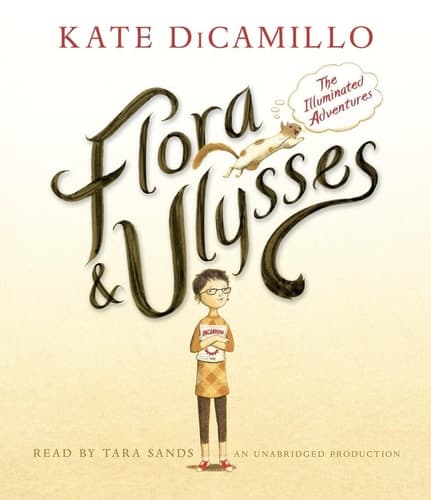
Flora and Ulysses: The Illuminated Adventures — Content Guide for Parents
Themes present
Not found
Content themes
Factual summary of themes present in this book. No opinion — just the facts.
Get the full theme breakdown in the app
Detailed evidence, confidence ratings, and source citations for every theme.
Download for iOSExample theme card
Religious themes
PRESENTContains references to prayer and church attendance. A minister character plays a supporting role in two chapters.
About this book
It begins, as the best superhero stories do, with a tragic accident that has unexpected consequences. The squirrel never saw the vacuum cleaner coming, but self-described cynic Flora Belle Buckman, who has read every issue of the comic book Terrible Things Can Happen to You!, is the just the right person to step in and save him. What neither can predict is that Ulysses (the squirrel) has been born anew, with powers of strength, flight, and misspelled poetry — and that Flora will be changed too, as she discovers the possibility of hope and the promise of a capacious heart.
From #1 New York Times bestselling author Kate DiCamillo comes a laugh-out-loud story filled with eccentric, endearing characters.
Frequently asked questions
Is Flora and Ulysses: The Illuminated Adventures appropriate for a 7-year-old?
The story involves a situation where Flora's mother wants to harm Ulysses, the squirrel, which introduces elements of danger. Additionally, there are mentions of people chasing Ulysses with knives, indicating mild violence. No genuinely frightening content present in the book. The narrative involves whimsical elements and humor rather than scary themes.
Does Flora and Ulysses: The Illuminated Adventures have violence?
The story involves a situation where Flora's mother wants to harm Ulysses, the squirrel, which introduces elements of danger. Additionally, there are mentions of people chasing Ulysses with knives, indicating mild violence.
Does Flora and Ulysses: The Illuminated Adventures have scary content?
No genuinely frightening content present in the book. The narrative involves whimsical elements and humor rather than scary themes.
Does Flora and Ulysses: The Illuminated Adventures have religious themes?
No religious content in the book itself. Search results do not indicate any religious practices, beliefs, or ceremonies within the story.
Does Flora and Ulysses: The Illuminated Adventures have racial/cultural content?
No explicit racial themes in the book narrative. Search results do not indicate that race is a central theme or plot point.
Does Flora and Ulysses: The Illuminated Adventures have profanity?
No profanity detected in the book. Search results confirm that the language is appropriate for the target age group.
Does Flora and Ulysses: The Illuminated Adventures have climate change?
No climate themes present in the book. Search results do not indicate any discussions related to environmentalism or climate issues.
Does Flora and Ulysses: The Illuminated Adventures have sexual identity?
No sexual content in the book. Search results indicate that the book contains no references to sexuality or inappropriate themes.
Does Flora and Ulysses: The Illuminated Adventures have gender roles?
The book features a strong female protagonist, Flora, but does not actively discuss or critique gender roles. The narrative focuses on adventure and friendship rather than gender dynamics.
Does Flora and Ulysses: The Illuminated Adventures have lgbtq+ themes?
No LGBTQ+ themes explicitly present in the book. Search results mention diverse representation but do not provide specific examples of LGBTQ+ content within the narrative.