Bumble-Ardy — Content Guide for Parents
Themes present
Not found
Content themes
Factual summary of themes present in this book. No opinion — just the facts.
Get the full theme breakdown in the app
Detailed evidence, confidence ratings, and source citations for every theme.
Download for iOSExample theme card
Religious themes
PRESENTContains references to prayer and church attendance. A minister character plays a supporting role in two chapters.
About this book
Since the publication of his classic Outside Over There in 1981, Maurice Sendak’s book illustrations have focused on interpreting the texts of such authors as James Marshall, Tony Kushner, Wilhelm Grimm, Ruth Krauss, Herman Melville, and Mother Goose. And beginning in 1980, with his sets and costumes for The Magic Flute, Sendak launched a busy second career as the designer of stage productions of opera and ballet. Now comes Bumble-Ardy, the first book he has written as well as illustrated in thirty years.
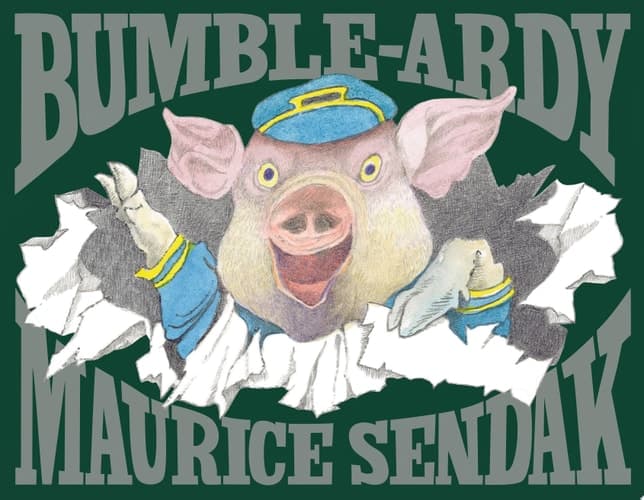
Bumble-Ardy has evolved from an animated segment for Sesame Street to a glorious picture book about a mischievous pig who reaches the age of nine without ever having a birthday party. But all that changes when Bumble-Ardy throws a party for himself and invites all his friends, leading to a wild masquerade that quickly gets out of hand.
In this highly anticipated picture book, Sendak once again explores the exuberance of young children and the unshakable love between parent (in this case, an aunt) and child.
Frequently asked questions
Is Bumble-Ardy appropriate for a 7-year-old?
The story includes themes of threats of butchering and a scene where Bumble-ardy's aunt becomes angry and yells at him, creating a tense atmosphere. This may be considered mild violence in the context of children's literature. The book contains darker themes, such as the mention of Bumble-ardy's parents being eaten and the aunt's transformation into a frightening figure. These elements may be unsettling for very young readers.
Does Bumble-Ardy have violence?
The story includes themes of threats of butchering and a scene where Bumble-ardy's aunt becomes angry and yells at him, creating a tense atmosphere. This may be considered mild violence in the context of children's literature.
Does Bumble-Ardy have scary content?
The book contains darker themes, such as the mention of Bumble-ardy's parents being eaten and the aunt's transformation into a frightening figure. These elements may be unsettling for very young readers.
Does Bumble-Ardy have religious themes?
No religious content in the book itself. Although Maurice Sendak has discussed his Jewish background and secular beliefs in interviews, these aspects do not appear in the narrative of 'Bumble-Ardy'.
Does Bumble-Ardy have racial/cultural content?
No explicit racial themes are present in the book. The characters are anthropomorphic pigs, and race is not a central theme or plot point.
Does Bumble-Ardy have profanity?
No profanity is present in the book. The language used is appropriate for children and does not include any offensive words.
Does Bumble-Ardy have climate change?
No climate themes are present in the book. The narrative focuses on a birthday party and personal relationships rather than environmental issues.
Does Bumble-Ardy have sexual identity?
No sexual content is present in the book. The narrative focuses on a pig's birthday party and does not include any themes related to sexuality.
Does Bumble-Ardy have gender roles?
The book does not actively discuss or critique gender roles. It features a pig raised by an aunt, but there is no thematic exploration of gender expectations or roles.
Does Bumble-Ardy have lgbtq+ themes?
No LGBTQ+ themes are present in the book 'Bumble-Ardy'. While Maurice Sendak's personal identity and experiences as a gay man are noted in various sources, these do not reflect content within the book itself.