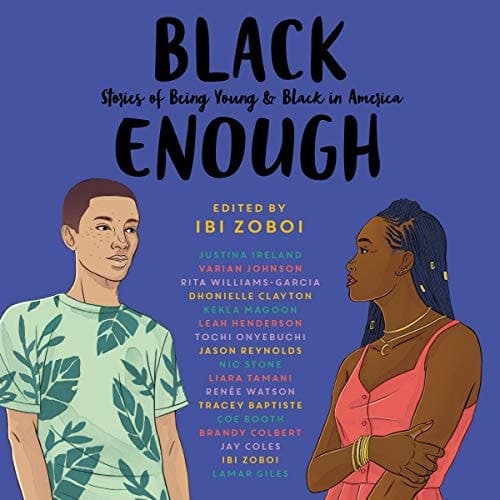
Black Enough: Stories of Being Young & Black in America — Content Guide for Parents
Themes present
Not found
Content themes
Factual summary of themes present in this book. No opinion — just the facts.
Get the full theme breakdown in the app
Detailed evidence, confidence ratings, and source citations for every theme.
Download for iOSExample theme card
Religious themes
PRESENTContains references to prayer and church attendance. A minister character plays a supporting role in two chapters.
About this book
Black is...sisters navigating their relationship at summer camp in Portland, Oregon, as written by Renée Watson.
Black is...three friends walking back from the community pool talking about nothing and everything, in a story by Jason Reynolds.
Black is...Nic Stone's high-class beauty dating a boy her momma would never approve of.
Black is...two girls kissing in Justina Ireland's story set in Maryland.
Black is urban and rural, wealthy and poor, mixed race, immigrants, and more--because there are countless ways to be Black enough.
Contributors: Justina IrelandVarian JohnsonRita Williams-GarciaDhonielle ClaytonKekla MagoonLeah HendersonTochi OnyebuchiJason ReynoldsNic StoneLiara TamaniRenée WatsonTracey BaptisteCoe BoothBrandy ColbertJay ColesIbi ZoboiLamar Giles
Frequently asked questions
Is Black Enough: Stories of Being Young & Black in America appropriate for a 7-year-old?
The stories depict various forms of violence, including serious incidents such as fatal car accidents and interpersonal conflicts among teens. This suggests a realistic portrayal of the challenges faced by Black youth. No content classified as scary or horror-related was detected in the search results.
Does Black Enough: Stories of Being Young & Black in America have violence?
The stories depict various forms of violence, including serious incidents such as fatal car accidents and interpersonal conflicts among teens. This suggests a realistic portrayal of the challenges faced by Black youth.
Does Black Enough: Stories of Being Young & Black in America have scary content?
No content classified as scary or horror-related was detected in the search results.
Does Black Enough: Stories of Being Young & Black in America have religious themes?
The anthology includes stories that explore themes of religion, such as a character's relationship with a Muslim girl, indicating the presence of diverse religious backgrounds and their impact on identity. However, the framing of religion is not extensively detailed.
Does Black Enough: Stories of Being Young & Black in America have racial/cultural content?
The anthology centers on the experiences of Black youth in America, addressing themes of identity, racism, and the complexities of being young and Black. It explores various narratives that highlight the diversity within the Black community.
Does Black Enough: Stories of Being Young & Black in America have profanity?
The anthology contains instances of profanity, including strong language and racially charged terms, reflecting the authentic voices of the characters and their experiences.
Does Black Enough: Stories of Being Young & Black in America have climate change?
No themes related to climate change or environmentalism were detected in the search results.
Does Black Enough: Stories of Being Young & Black in America have sexual identity?
The anthology addresses themes of dating and relationships, including a specific account of sexual assault. It explores both same- and opposite-sex attractions, indicating a nuanced approach to adolescent sexuality.
Does Black Enough: Stories of Being Young & Black in America have gender roles?
The anthology includes discussions around gender roles, including feminist themes and the complexities of gender identity within the Black community. Some stories reflect on traditional versus modern gender expectations.
Does Black Enough: Stories of Being Young & Black in America have lgbtq+ themes?
The anthology includes stories that feature LGBTQ+ characters, with references to same-sex attraction and relationships. One quote highlights a character's negative reaction to homosexuality, indicating a discussion around LGBTQ+ themes within the context of Black identity.